
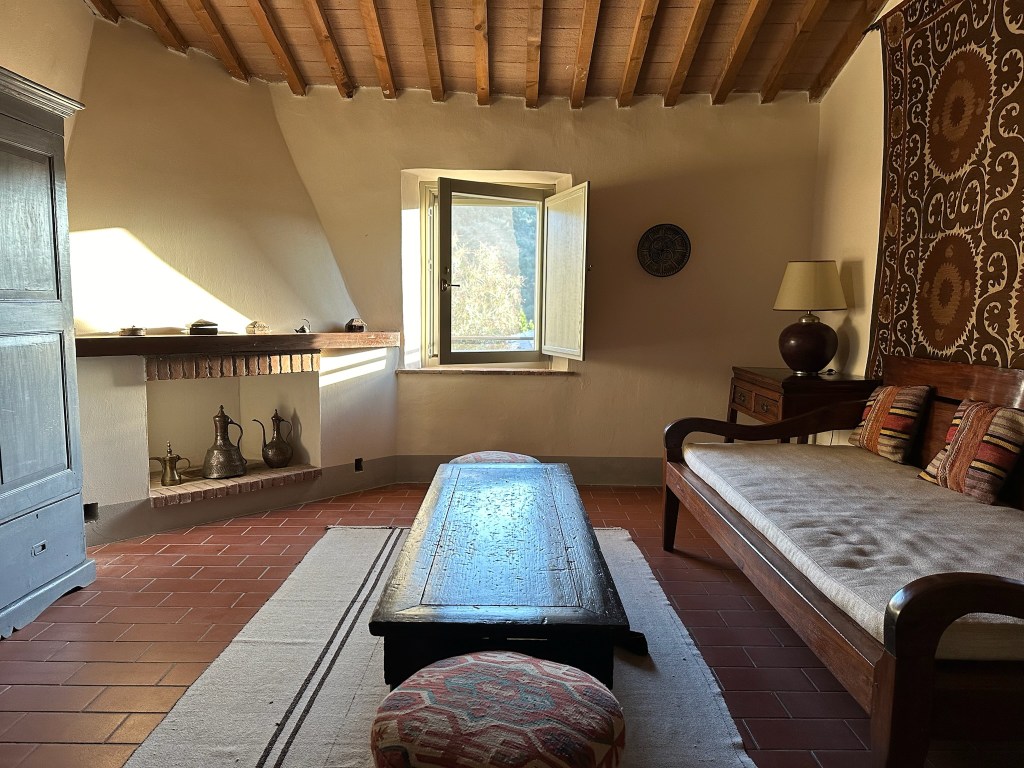
Last week we took a couple of days to go see our friend, Corto Baccheschi Berti, who lives in Maremma, the western part of Tuscany. It’s a huge region—around 5,000 square kilometers—which basically goes from the Tyrrhenian Sea to the base of the Apennine Mountains. We’d met Corso several years back, when we visited his family’s lovely hotel, Castello di Vicarello, and he and Matt discovered a shared love of foraging and hunting. On this trip, he suggested we check out the relatively new Locanda Fontelupa, which his friend opened a couple of years ago. We rented a car at Termini train station in Rome, drove about 2 hours north, and in no time were driving up the cypress-lined dirt road to Fontelupa. Otto, a young Langotto dog, greeted us warmly, quickly followed by Giuska, who runs the 5-room property, which is a beautiful family project. (I go in depth on my stay here in this Guest Book.) Two years ago, Giuska, her brother Silvio, their mother, and Silvio’s wife opened Fontelupa, and it’s truly a dreamy place to stay—stylistically, philosophically, and in such a rich yet untouristed area.
On our first night, we met up with Corso in the town of Campagnatico, a 20-minute drive through idyllic rolling hills dotted with cypress trees—the Under the Tuscan Sun visual that we are all suckers for. The big difference is that this area just doesn’t have the tourists. I’d been in the Pienza area several weeks prior, for the first time in a decade, and was shocked at how overrun it was. The last thing I want is to arrive in a small village, have to park in an overflow parking lot, then walk past idling buses only to enter the walled town and immediately be greeted by tourist shops selling limoncello, lavender sachets, magnets and t-shirts. To be 45 minutes away in towns that barely have a store, and just one or two restaurants that are filled with locals—that is the Italy I want to see. (I’ve said it before and I’ll keep on saying it—go to the towns you’ve never heard of! You’ll experience the real Italy.)
The next day, we met up in Civitella Marittima, a small hill town with incredible views, and had one of the most delicious pastas of my life (a pici with leeks, mushrooms and sausage) at Locanda del Cassero. In the afternoon, Giuska brought me to Roselle, the ancient Etruscan city/archeological park, only 15 minutes from Fontelupa. There was just one other person in the entire place. It was mind-blowing on several levels—how well preserved it was, that I’d never heard of it, and that nobody was there—and it’s literally just off the E80 highway.
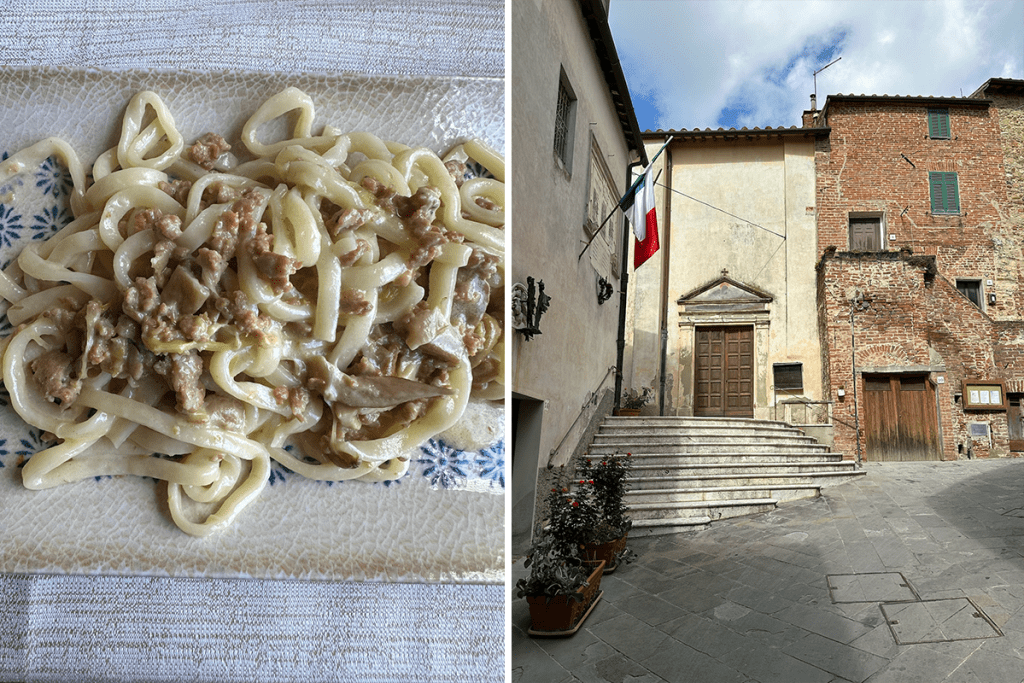
On our last day in Maremma, we drove through Paganico, the charming walled town that’s close to Corso’s home. It’s a working town, where you buy a lovely basket at a hardware store, not a tourist shop—and it really supplies the people who live and work there. Corso had invited us over for a lunchtime feast, along with his next-door neighbors, who also happen to be my friends (and Yolo contributors): Rudston, founder of the Italy walking trip outfit Maremma Safari Club, and his wife, Helene.
It was an all-day affair, and we left at 5pm to head to Porto Ercole and the Hotel Il Pellicano, where we were meeting with our friend and owner, Marie-Louise Sciò, then spending the night. It’s hard to believe that from this very rural part of Tuscany, we could reach the Pelli within an hour and 10 minutes. We had a swim and shower, followed by drinks with our favorite bartender, the most lovable Federico, and a great dinner overlooking the sea.
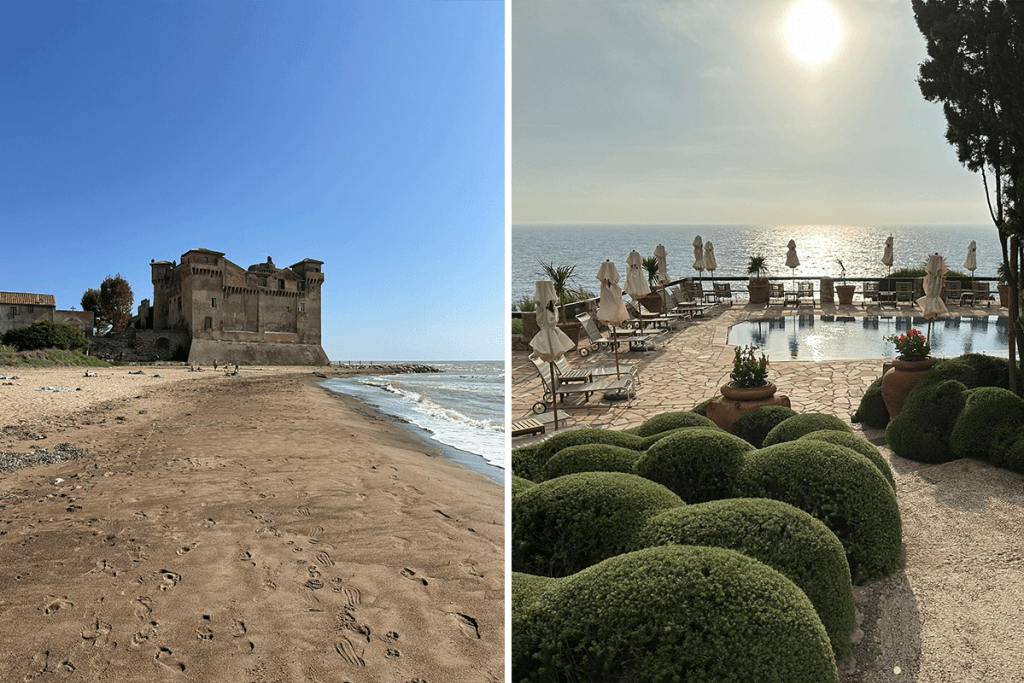
The next morning, after a walk into the hills above the hotel, we headed towards Rome, but I insisted that we stop in Santa Severa at this fish restaurant, L’Isola del Pescatore, that I’d always wanted to visit. I’d heard such great things about it and seen photos of the beach it was on, with this epic castle just touching the sea. The approach is nothing fancy—a scrappy parking lot, and kids in swimsuits ordering their panini or gelato at the walk-up counter. But luckily I’d called an hour before and made a booking, because it was totally packed, filled with long tables of families, small tables of romantic couples… all locals. The food was incredible—we had a fritto misto, which was so delicate, and shared a pasta with swordfish and wild fennel pollen. We really wanted to try their pasta specialty, which is with mussels and some pecorino on top. (Yes, they believe that seafood pasta can coexist with cheese!) And their wine list was so impressive—an entire page just devoted to Alto Adige. It was certainly not the beach shack that it looked like from the approach. Afterwards, we took a walk on the beach down to the castle, which also happens to be a 1-star hostel, with in-room bathrooms. Costa Meno for sure! The location certainly doesn’t get any better, and you have a fantastic restaurant right there.
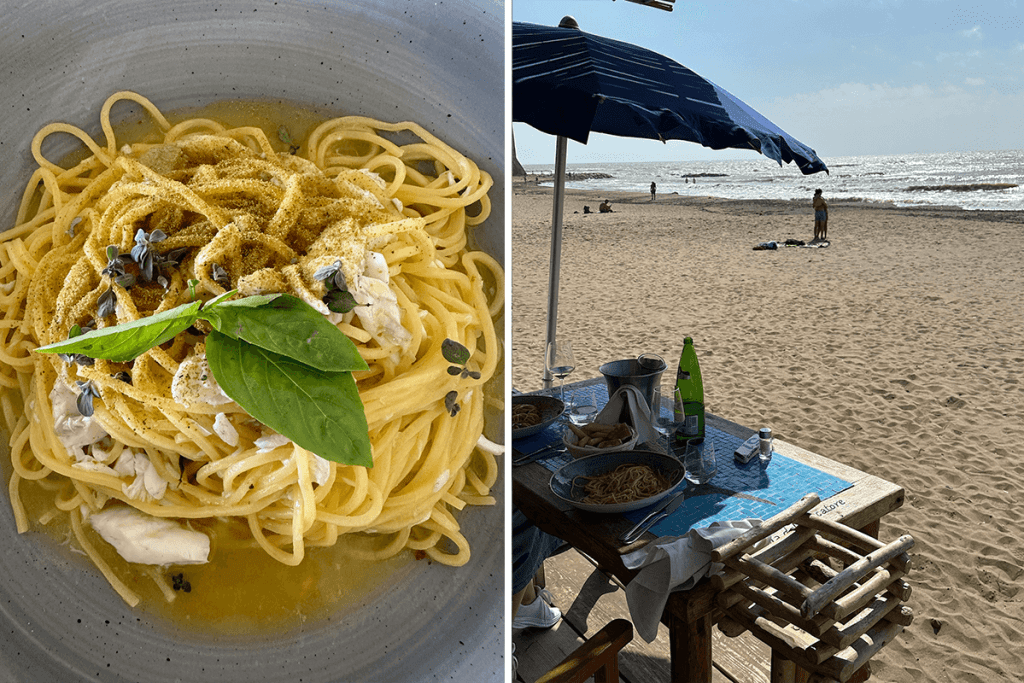
There’s a whole lot more to discuss on the Roman Coast—so many forgotten beach towns with excellent beach club restaurants, many from the 1930s. I’ll definitely be revisiting this topic soon! But for now, if you’re looking for an easy seaside escape, check out L’Isola del Pescatore. You can drive here in 45 minutes from Rome, or take a train, rent a beach chair from them, and have the best lunch of your life.
Leave a Reply
You must be logged in to post a comment.