Though I am a world traveler many times over, for some reason Eastern Europe has eluded me. Back in the ‘90s when I was studying abroad in Spain, I had grand plans to visit Prague, Budapest and Vienna before returning home to the U.S., but those best-laid plans were sidelined by a gang of Swedes who convinced me to tag along to Morocco (a whole other story). Thirty years on, my best friend (whom I travel with a couple of times a year) suggested a week-long fall trip to two of the cities that escaped me so many years ago—Vienna and Budapest. My stay in Vienna was quick—just two nights—and marred by delayed flights and jetlag haze. But Budapest, where we arrived by train, was the perfect fall city break.
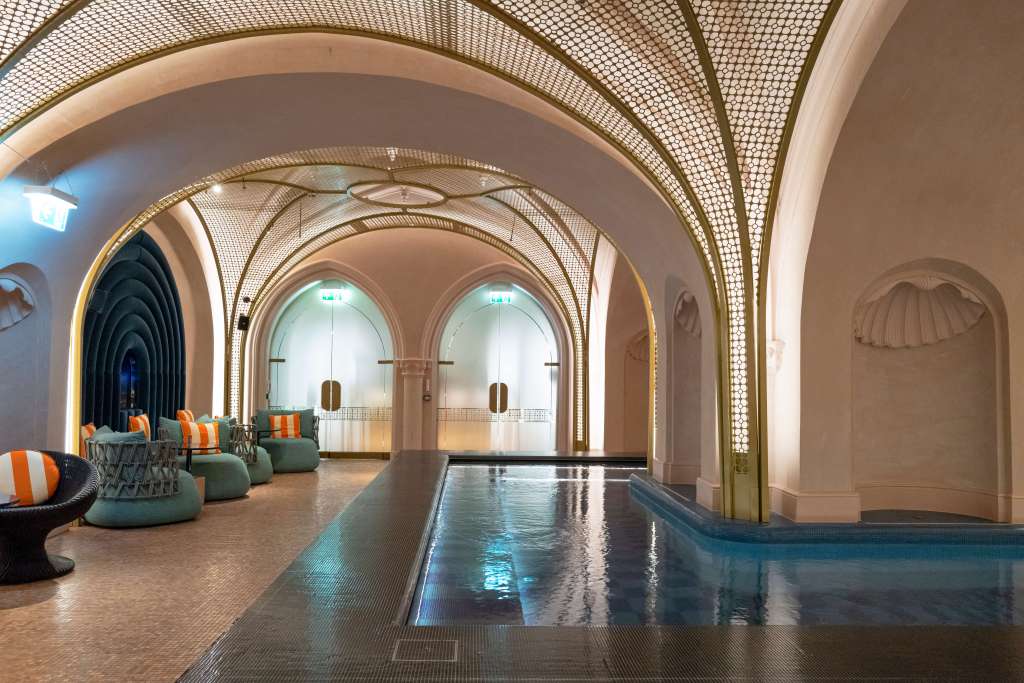
On a friend’s recommendation, we stayed at the new W Hotel. It had been many years since I’d stayed at a W, and I wasn’t sure if the vibe was really what we were looking for. But it was amazing—to relaunch the brand into the 5-star universe, W acquired, gutted, and redesigned Budapest’s Drechsler Palace, a grand neo-renaissance building that sits across the street from the Hungarian State Opera House, home of the Hungarian Ballet. The W Budapest is design-forward, colorful and contemporary interiors within an architecturally significant structure and spacious rooms. Since many visitors come to Budapest for the city’s thermal waters, W incorporated a bathhouse into the lower level, with a steam room, sauna, and spa—the best place to end a long day of exploring.
I tend to conduct a massive amount of restaurant research before I travel to avoid wasting a meal. That said, we were so tired at dinnertime on our first night after traveling that we ate at the W and found their Nightingale restaurant to be a great surprise. A pan-Asian spot anchored by the hotel’s bar, the food was excellent and creative, with small plates focusing on beef and fish. The ginger sea bass and the hamachi crudo were standouts (don’t skip a side of jalapeño pepper mashed potatoes!).
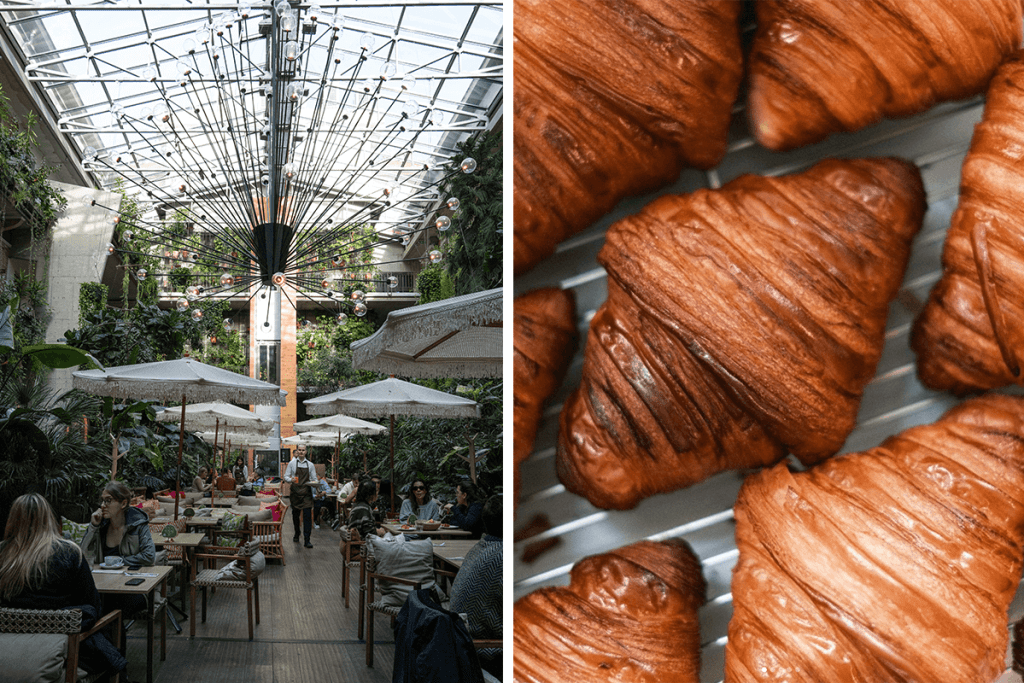
Each day, we decided to forgo hotel breakfast to walk around. Our first morning we chose to brunch at TwentySix, a restaurant with eastern Mediterranean fare. Like many restaurants in Budapest, from the outside TwentySix doesn’t look like much but a storefront inside another crumbling building. But when you walk through the portico and into a multi-story glass atrium dripping with plants, you know you have found something special. Despite the chill outside, the restaurant was cozy inside like a greenhouse, with a mix of foreigners working on brunch and locals grinding on laptops. For something more on-the-go, Freyja—A Croissant Story, is a quick spot for a light and flaky breakfast. (Beware: New York Café, known on TikTok for being one of Budapest’s best patisseries, is a tourist trap on the grandest scale.)
We had two magnificent lunches, one in Buda (the left side of the Danube) and one in Pest (the right side). Behind the castles of Buda is Deryne Bistro, a light-filled restaurant with a big bar and street-side seating. Deryne serves seasonal Hungarian dishes with a contemporary twist like schnitzel, stuffed cabbage, and duck confit. The schnitzel was one of the best I have ever tasted—it was also bigger than my head. On a return stay in Budapest, I would time my visit with brunch to take advantage of the sister bakery’s exquisite pastries. On the other side of the river, in the city’s Jewish quarter, is Dobrumba, a small and unassuming neighborhood restaurant serving Israeli/Mediterranean cuisine. One comes across a lot of falafel and hummus in Budapest, and Dobrumba has the best (do not be fooled by what you hear about Mazel Tov, a restaurant with a similar menu—the line is long, and the food is meh (yes, we ate there).
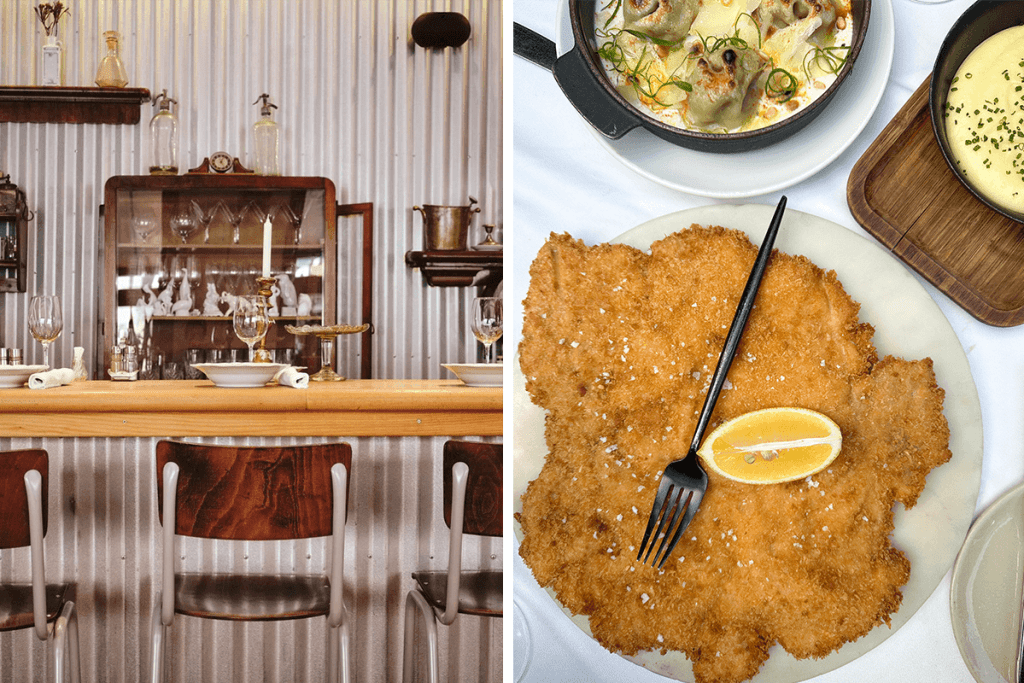
For traditional Hungarian food, we had an excellent dinner at Tati Farm to Table, a short walk from W in Pest. The menu, heavily focused on meat (as is the Hungarian diet), is a fresh twist on regional recipes that have been around for generations, such as rustic cottage cheese noodles (lighter than pasta!), beef cheek goulash, and chicken paprikash (lots of paprika on the menu in this part of the world). Tati is a wonderful place to experiment with local Hungarian wines—the list is deep, and they are skilled at pairing. Ghetto Gulyás is a hidden gem in the Jewish Quarter, just down the street from the synagogue. A cozy neighborhood spot, Ghetto Gulyás is where you end up sitting at the bar on a chilly evening. Known for hearty goulash, roasted bone marrow, and beef tartare, do not show up without an appetite for rich food, and do not leave without sampling the homemade cheese curd dumplings for dessert. Watch out for the surprisingly low bar stools—the height puts the rim of the soup bowl closer to your mouth! Lastly, we had a beautiful meal at Babel, one of Budapest’s few restaurants with a Michelin star, where the Swedish-born chef turns out an 8- or 12-course menu of small-size Austro-Hungarian dishes using regional ingredients like smoked eel, venison, potato, and kohlrabi. If you have made it this far, do not hold back when offered the signature casino egg with sturgeon caviar—it was the best thing we ate all night.
Budapest is known for its “Ruin Bars,” low-priced bars and dance clubs that have sprung up in dilapidated buildings in different quarters of the city. The largest and most famous is Szimpla Kert, a sprawling space that is more than just a bar—it hosts mixed media events, pop-up art exhibitions, and on Sunday turns into a farmers’ market. We sadly were not able to stay up late enough for the nightlife, as we had to leave early on Sunday.
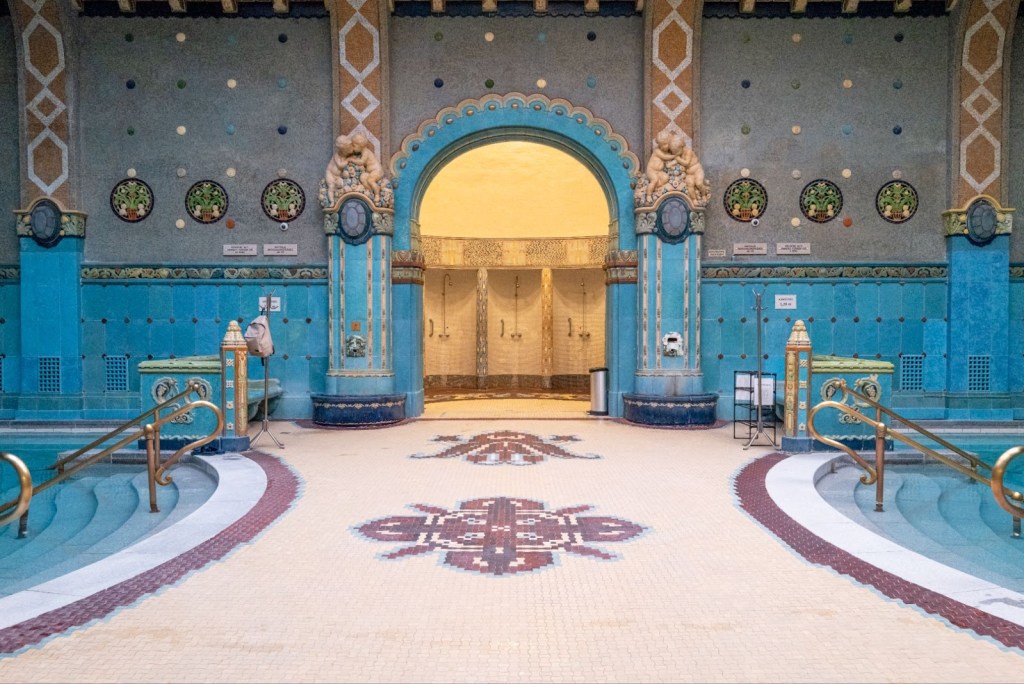
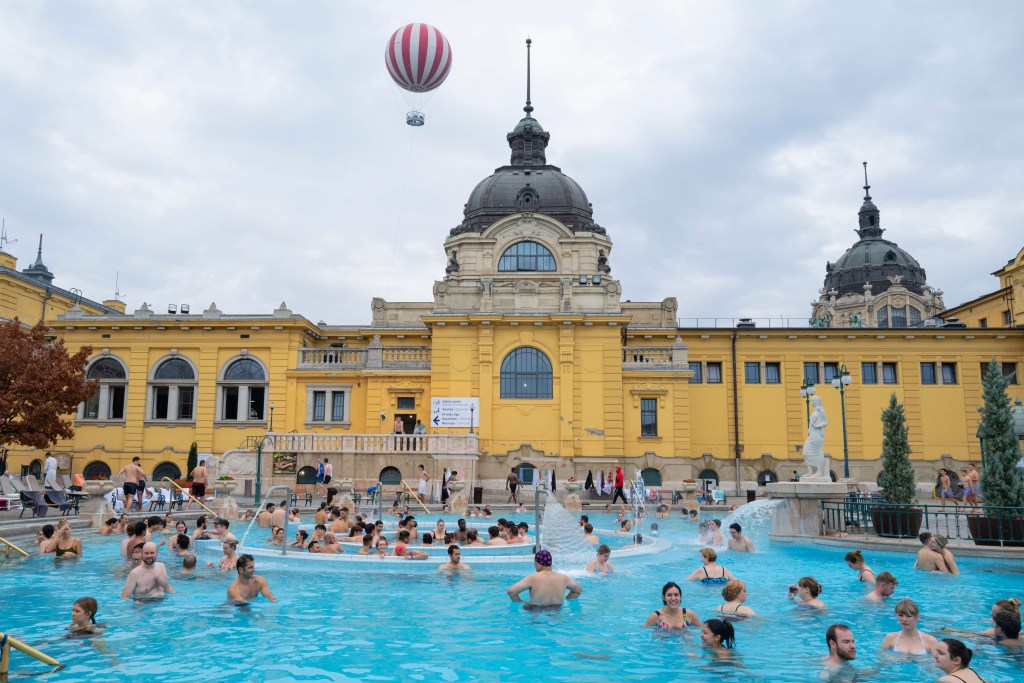
The best way to experience Budapest’s abundant cultural sites (and the city) is on foot. The late October air was crisp, and the city was not crowded—I highly recommend visiting this time of year. We began our first day on the Buda side of the river with a trip to the Gellért Baths. Among the many thermal bath houses in Budapest, Gellért is the best because of its beautiful architecture and the fact that it draws both locals and visitors. In addition to thermal pools of various temperatures, Gellért also has a large indoor pool pavilion for lap swimming (bring a swim cap, they are required!). Arrive first thing in the morning and, as we did, you will have the place to yourself. If you have extra time in the city and want to experience another public bath, Szechenyi Thermal Bath is a larger, primarily outdoor complex on the Pest side of the river. Szechenyi is touristy and draws the 20-something hostel crowd but is an experience in and of itself. Go in the afternoon when people-watching is at its best. The blue pools packed with bodies are a remarkable sight against the backdrop of bright ocher-hued buildings.
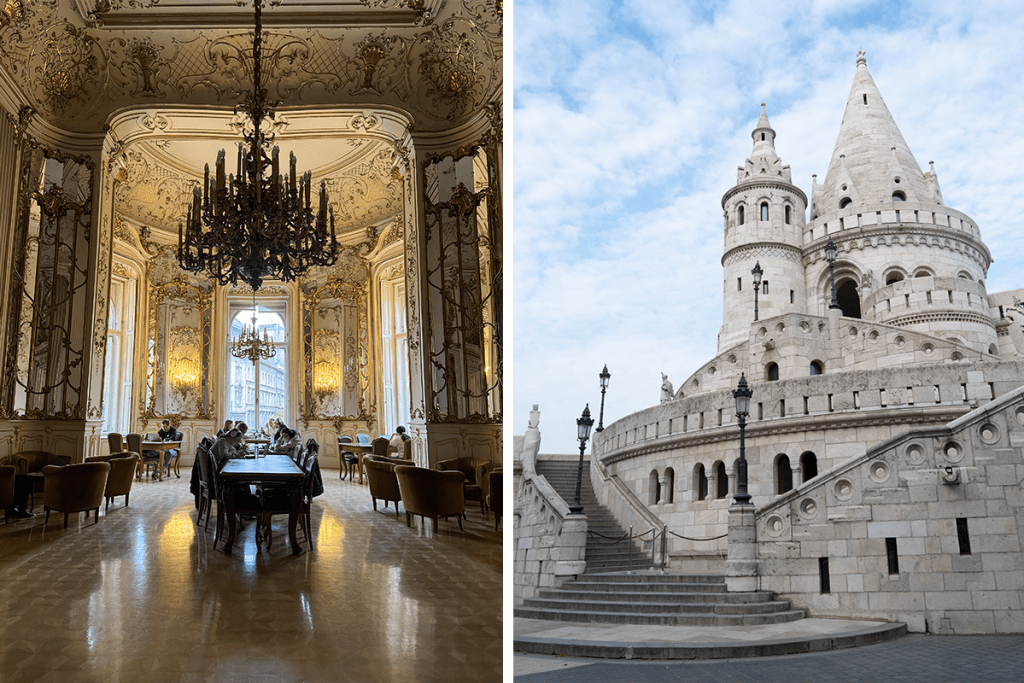
Post soak at Gellért, stroll through Buda to lunch at Deryne, then hike up and over the hill to take in the views of the city from the Fisherman’s Bastion and The Church of our Lady of Buda Castle. A short stroll down river brings you to the Castle and its museums housing Hungarian art collections. Because these are all historical and cultural sights, be prepared for crowds and time your visit accordingly.
On the right bank of the Danube, Pest is about exploring the heart of the city. Visit St. Stephen’s Basilica and the Parliament Buildings. Walk through the Jewish quarter, spending time at the Dohany Street Synagogue (the largest in the world), Metropolitan Ervin Szabo Library (bring your book or laptop and take a moment in the elegant restored fourth floor palace apartment), and Rakoczi Market Hall, a beautiful old indoor market that sadly doesn’t appear to be thriving as it once did. In between, always look up—take in the architecture, the people, the traffic, and the smell of hotdogs being cooked on the street (these are not New York style wieners!). Across from the W is the Hungarian Opera House, which can only be visited by joining a tour or buying tickets to a performance—plan accordingly. Finally, the city on the Danube is best viewed on a sunset walk along the river when the lights of the Parliament buildings shine brightly and the bridges swell with evening strollers.
If time allows, spend a couple of hours walking through the parks of Margaret Island. Reminiscent of New York’s Central Park, Margaret Island has beautiful paths that take you along the water and through the trees. There is also a bathhouse, places to grab a quick bite, and a lovely Japanese garden.
While I loved our three days in Budapest, I’m already looking forward to a return trip to really dig in and tap into the layers of the city that make the heart of Budapest beat.
Leave a Reply
You must be logged in to post a comment.