We’ve been obsessed with our friend and former colleague Melissa Ventosa Martin’s Old Stone Trade since she launched it after stepping back from her work as a fashion editor during the pandemic. Her idea was to bring together beautiful, traditionally handcrafted pieces from all over the world that tell a story about their cultural origins—a hand-smocked blouse from England, a trench coat from Cantabria—and that could be valued and passed down as modern heirlooms. It’s also the kind of uniform dressing—a few versatile, well-made pieces that serve as a neutral canvas—that we fully embrace ourselves. So when Melissa told us that her new summer collection was focused on New England, we jumped at the chance to find out more about the makers she’d worked so hard to identify, as well as the hidden gems in the northeastern (mainly coastal) towns where they live and work. She shares her hard-won local intel with us below! —Alex Postman
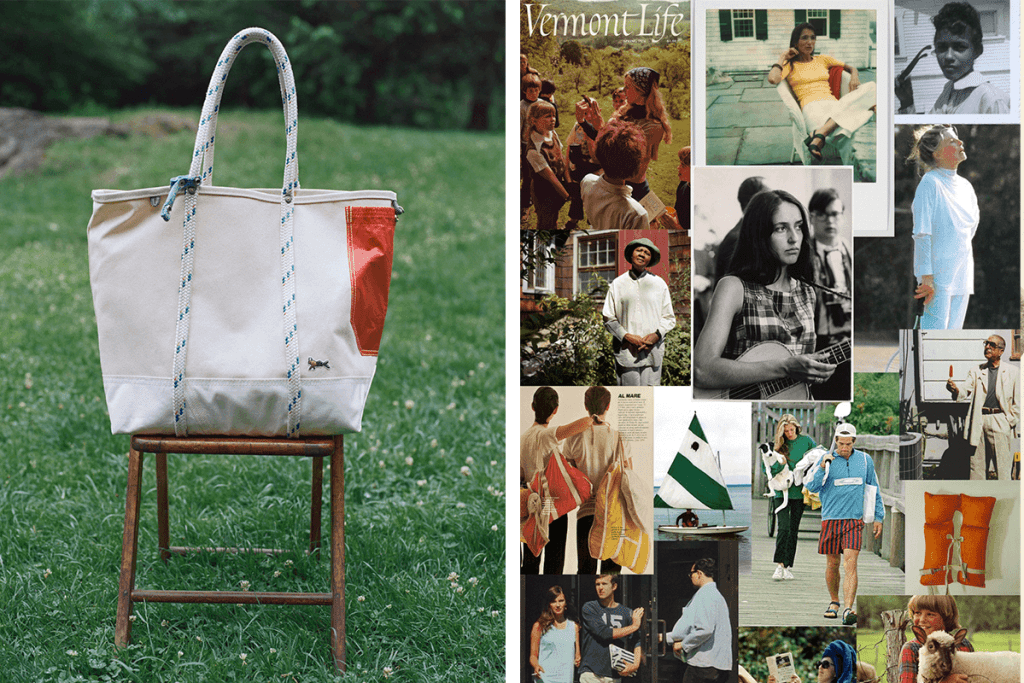
White jeans on Lee Radziwill, Carolyn Bessette with her canvas boat bag, Katherine Hepburn playing tennis in layered tees, Jamaica Kincaid in her Vermont garden, Joan Baez at Newport—these were just some of the images on our mood board when we began planning Old Stone Trade’s New England Craft edition.
Our earliest editions focused on traditional crafts overseas—kilts handmade in Moray, Scotland by Andrea Chappell; fisherman sweaters hand-knit on the Aran Islands. But after turning our attention to North America last summer with an edition centered around cowboy boots and denim, we knew we wanted to take a closer look at New England—a region shaped by working wardrobes and iconic visual codes.
As with Fair Isle, many of the coastal craft traditions we found in New England are deeply tied to fishing and boating, where skill and necessity have long intersected. Some of the best-known staples—rope bracelets, canvas bags, baskets—came to mind quickly, but others we uncovered through word of mouth and research. And while much of the work is seasonal, we’ve been lucky to meet many of these artisans over the past two years. What follows is not a definitive guide but a starting point—organized by region and material—for discovering some of New England’s most enduring treasures.
VINALHAVEN & DEER ISLE, ME – ROPEWORK
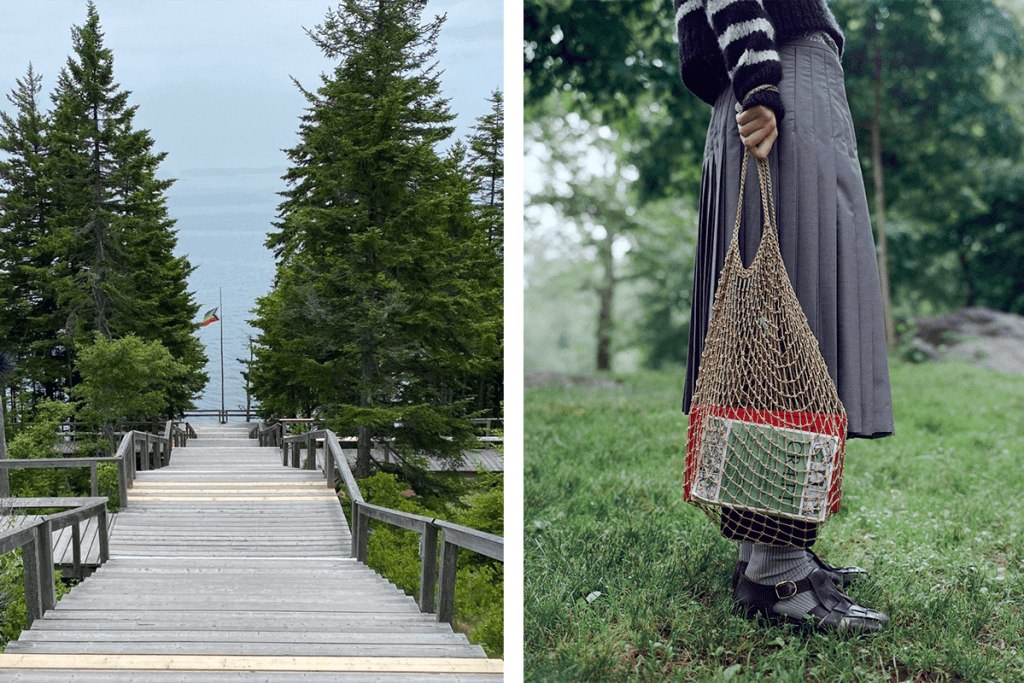
Nowhere is the connection between craft and livelihood more present than on Vinalhaven, an island in the middle of Penobscot Bay and home to one of the largest lobster fishing fleets in the world. Fish netting—the craft of hand-tying the nets used in lobster traps—was once an industry here, though today most nets are factory-made. One of the only remaining local netters is Stephanie Crossman, who learned the intricate technique from her husband’s great-grandmother, “Gram J,” at the age of 92. Stephanie continues to hand-tie each piece using antique netting needles and wooden mesh boards. As she explained, netting is far more refined than most imagine—sharing many similarities with lacemaking.
Across the bay on Deer Isle, the landscape shifts to dense lichen-covered woodlands. It’s here you’ll find the Haystack Mountain School of Crafts, a haven for artists since 1950. In July, they open their studios to the public—a rare chance to witness the work of local and visiting artisans. In nearby Stonington, maker Tim Whitten runs the Marlinespike Chandlery, where antique maritime tools share space with his finely knotted ropework—bellhops, beckets, and pendants cradling sea glass and beach stone in handwoven linen.
Where to visit: – Haystack Mountain School of Crafts – 89 Haystack School Dr., Deer Isle. They have an Open House on July 5; studio Visits with Stephanie Crossman (by appointment: concierge@oldstonetrade.com); Marlinespike Chandlery – 58 W Main St., Stonington. Where to eat: Greet’s Eats (Vinalhaven food truck, acclaimed lobster rolls). Where to stay: The Tidewater Inn (Vinalhaven); Deer Isle Hostel (off-the-grid forest huts).
NANTUCKET, MA – BASKETRY
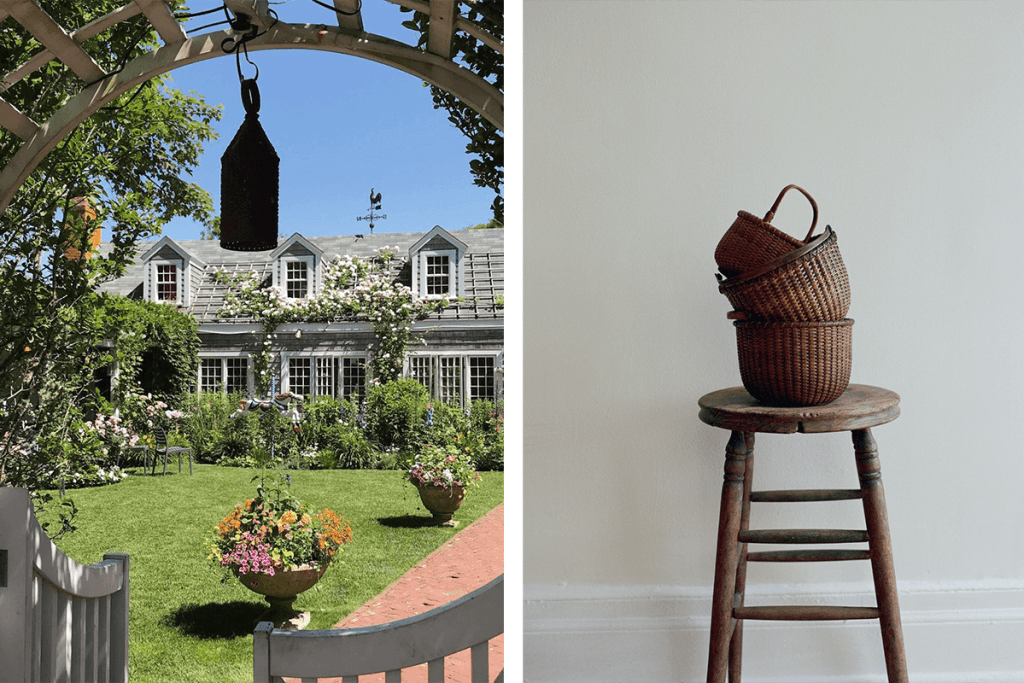
On Nantucket, we sought out another storied maritime tradition: the lightship basket. Originally woven by sailors aboard 19th-century lightships—floating lighthouses—the baskets are known for their rattan weaves, solid wood bases, and carved lids. Long considered a closed tradition, they’re highly collectible and deeply rooted in place. After what felt like contacting every basketmaker on the island (one simply replied, “stop”), we found Caitlin Parsons, a second-generation maker who learned the craft from her father, Tim Parsons. Caitlin’s work is precise and deeply respectful of tradition. Wait times for a custom basket can be a year or more, but she also makes elegant woven bracelets and offers custom scrimshaw engraving.
For those unwilling to wait, The Perfect curated a selection of vintage lightship baskets for our collaboration, including a rare example by José Reyes, the mid-century maker who introduced the “friendship basket,” distinguished by its carved lid and fitted base.
Where to Visit: Caitlin Parsons (Nantucket Bracelets); Nantucket Historical Association — set in an 1800 House, they have an open house July 16–17, 1–4pm; Small Keepsake Basket Workshop. Where to stay: The Cottages at the Boat Basin — right on the harbor in town; The Wauwinet — a classic New England retreat for a quieter escape. Where to eat: The Chanticleer in Sconset — a family favorite, especially in the rose garden. What to buy: The Perfect x Old Stone Trade (orders via concierge@oldstonetrade.com).
VERMONT & WESTERN MA – WOOL
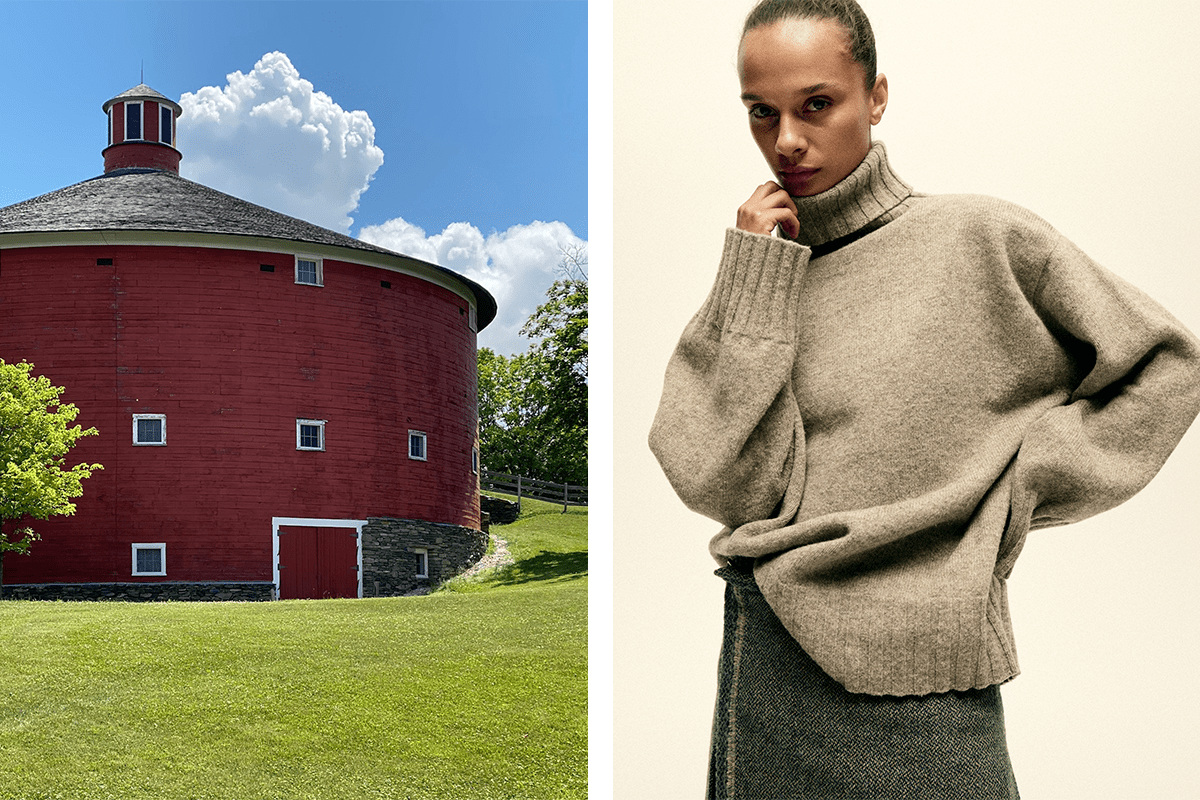
Following wool from sheep to sweater is one of the most satisfying ways to trace the tradition of craft. We collaborated with Muriel’s of Vermont on three classic sweaters, each knit from fleece raised at Lila’s Mountain Farm in Great Barrington, Massachusetts—a smallholding lovingly stewarded by Mary Berle.
Muriel’s recently opened a new studio and shop in the lakeside town of North Hero, Vermont—quintessential small-town Vermont, complete with a brewery, antique shop, and local arts center. The town makes a great anchor for exploring the farm-to-fiber landscape.
Driving from Vermont to Maine offers a beautiful route through both farm and coastal traditions. Along the way, we recommend stopping at the Shelburne Museum, home to an extraordinary collection of Americana, and the Newbury School of Weaving, one of the country’s only craft schools dedicated to historic European-American textile techniques.
Where to Visit: Muriel’s of Vermont; Shelburne Museum, Shelburne, VT — don’t miss the Mara Superior porcelain show; Newbury School of Weaving, Newbury, VT — founded in 1975, they offer single-day and multi-week programs in traditional spinning, dyeing, and weaving — 3537 Route 2, North Hero. Where to eat: Kraemer & Kin (local brewery); Shore Acres — they also have a great inn. Where to stay: North Hero House — walking distance to the studio. What to do: Browse the Shelburne antiques stores, visit the arts center.
PAWTUCKET & NEWPORT, RI; FALL RIVER, MA –TEXTILE CORRIDOR
While maritime craft came to mind quickly, our understanding of New England’s textile legacy deepened through denim artisan Glenn Liburd, who worked with us to handcraft a pair of selvedge jeans for our American edition. Glenn, a longtime veteran of Levi’s custom program, now works out of a studio in Pawtucket, Rhode Island, just down the road from the Old Slater Mill—America’s first water-powered cotton spinning mill and the symbolic birthplace of the Industrial Revolution.
From there, it’s a short drive north to Fall River, Massachusetts, where the New England Shirt Company still cuts and sews shirts by hand in the 19th-century Flint Mills complex. Together, we developed an update to the Oxford cloth button-down—cut and sewn in one of the last American shirt factories. (Visits by appointment: concierge@oldstonetrade.com)
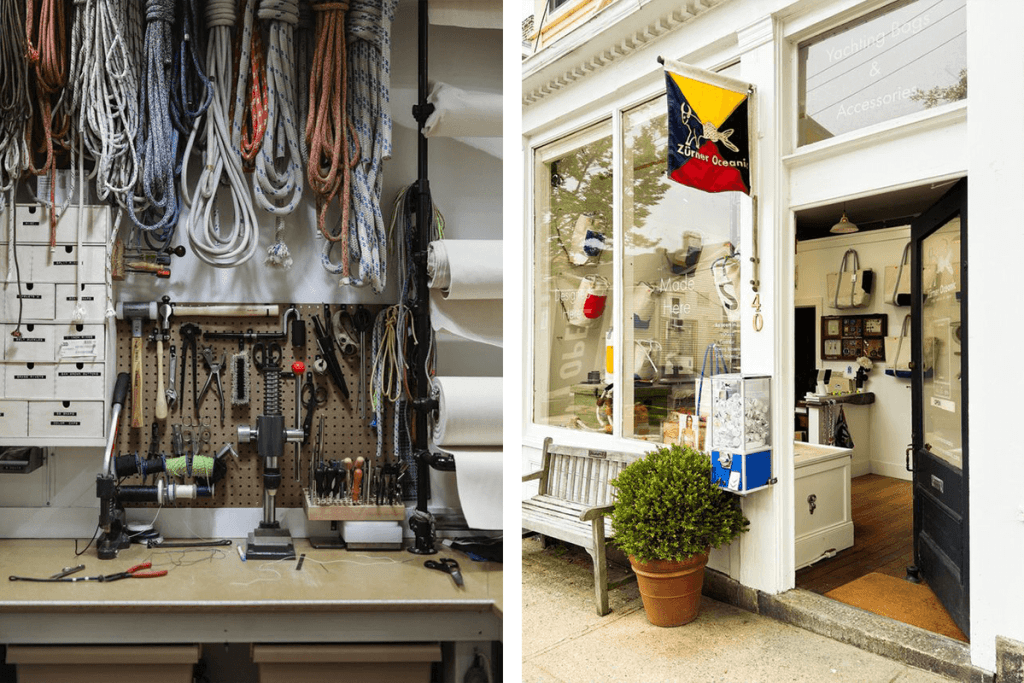
Less than an hour south, in Newport, John and Jennifer Zuerner repurpose vintage sailcloth into durable boat bags for their brand, Zürner Oceanic. Their workshop, behind a small storefront, lets clients choose from a selection of canvas and rope. These sails—once part of coastal racing and trade—now speak to Newport’s quieter legacy in performance textiles.
Where to visit: Old Slater Mill, Pawtucket — museum tours, textile exhibits, and demonstrations; Glenn’s Denim Studio – by appointment only; Zürner Oceanic — walk-ins welcome; Franklin Street, Newport. Where to eat: Portugalia Marketplace, Fall River — housed in a former mill, it’s a destination for Portuguese food and wine. Thames Street Kitchen in Newport is exceptional. Where to stay: The Inn at Castle Hill, Newport — it’s very magical old Newport, especially the old part of the hotel that was originally the Agassiz mansion. Book the turret suite, or the beach cottages that are right on your own little private beach.
Leave a Reply
You must be logged in to post a comment.