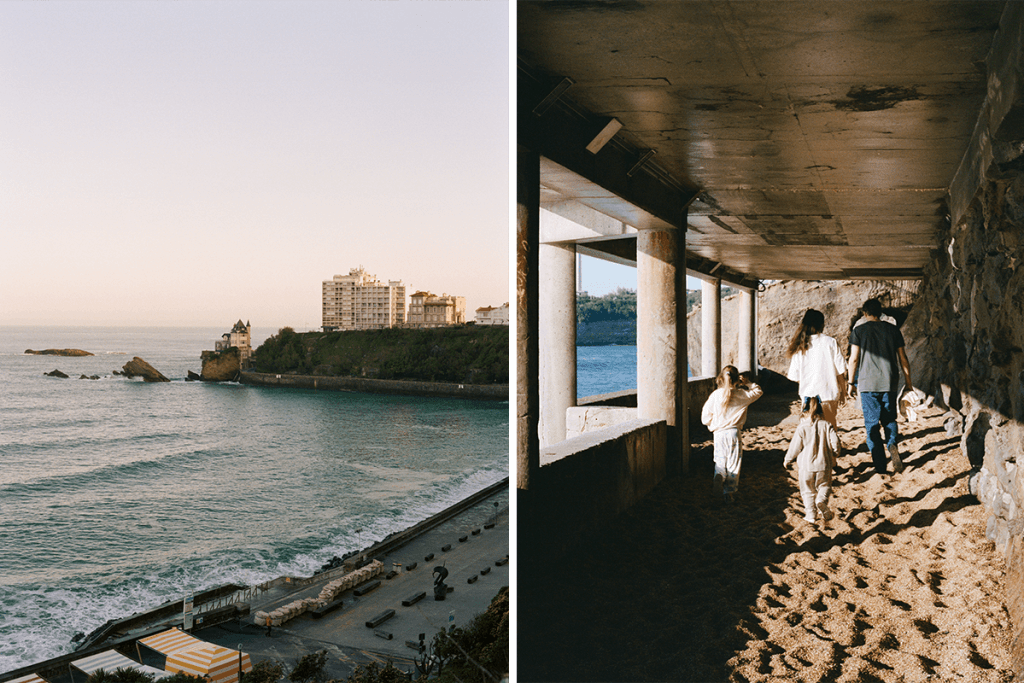
Marta de la Rica describes herself as “a New Yorker by birth, Spanish at heart, and Biarrot by adoption. The first two were given to me, the last one was chosen.” Known for crafting soulful, artful interiors filled with collected objects and playful details, the Madrid-based designer considers Biarritz—the Basque Coast town where she has spent summers since childhood—her most enduring source of inspiration. You can feel it juicing her latest project, a Cristine Bedfor hotel in Málaga, where striped beach-cabana fabrics and hand-painted tiles nod to coastal nostalgia, and vintage finds conjure the charm of her favorite brocantes.
Her new book, Biarritz: A Vocabulary of Colour, is a love letter to the city. Through photographs both atmospheric and intimate—wild horses grazing in the Pyrenees, sausages hanging in a shop, wetsuits drying in the sun—she captures the rhythms and rituals of daily life in this corner of the Basque Coast. We asked Marta to share her favorite spots, memories, and objects from her happy place.
When/why did you first start going to Biarritz? Has it changed at all in the years since?
I’ve been going to Biarritz basically all my life. I don’t think it has changed much—that’s part of its magic. Like everywhere in July and August it’s incredibly busy, probably more so than years ago, but that’s when you enjoy staying at home, spending time with family, and planning carefully when you go out. What has changed is the people around me—that’s life. I remember my childhood there with my grandparents, who are no longer with us, but now my parents are there as grandparents to my daughters, who didn’t exist back then… It’s the circle of life, and I feel so fortunate that this circle keeps turning in the same place.
How does the city uniquely blend Spanish and French cultures?
There’s a very French side to Biarritz, which feels quite different from Spain, but it’s true that the Basque heritage is shared with the Spanish Basque Country. There’s a strong local pride in belonging to this region. You can see the connection in many aspects: the architecture, the gastronomy, the local festivals (in Bayonne, for example, people dress just like in Pamplona during San Fermín), and in the love and respect for the sea and fishing… These are beautiful cultural ties that both sides of the border have in common.
Your book is called A Vocabulary of Colour. What are the colors of Biarritz—how would you describe the palette?
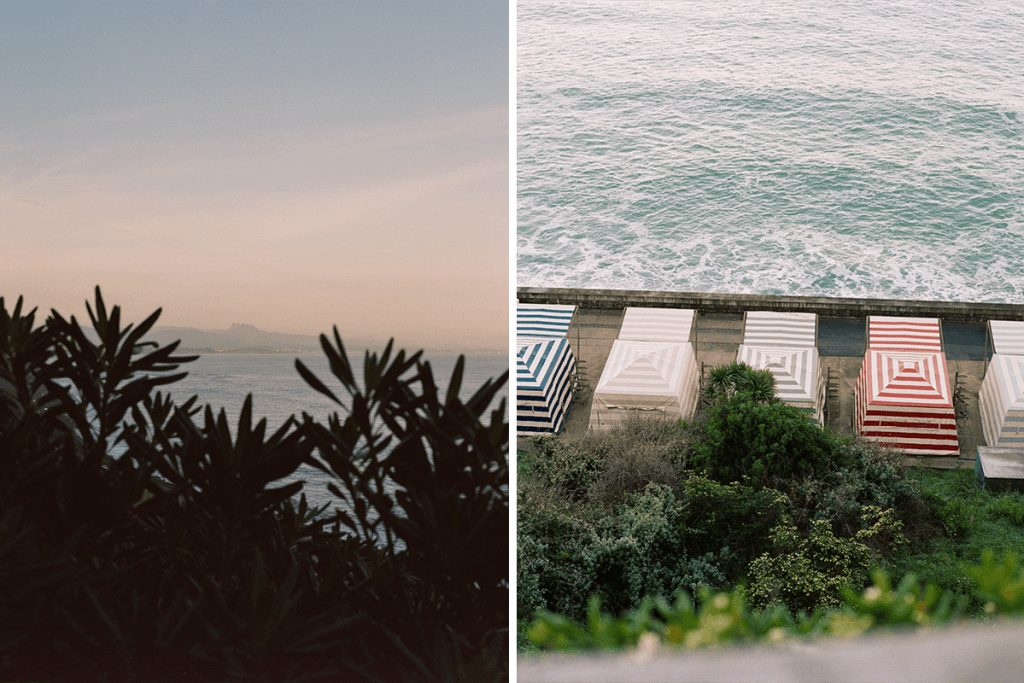
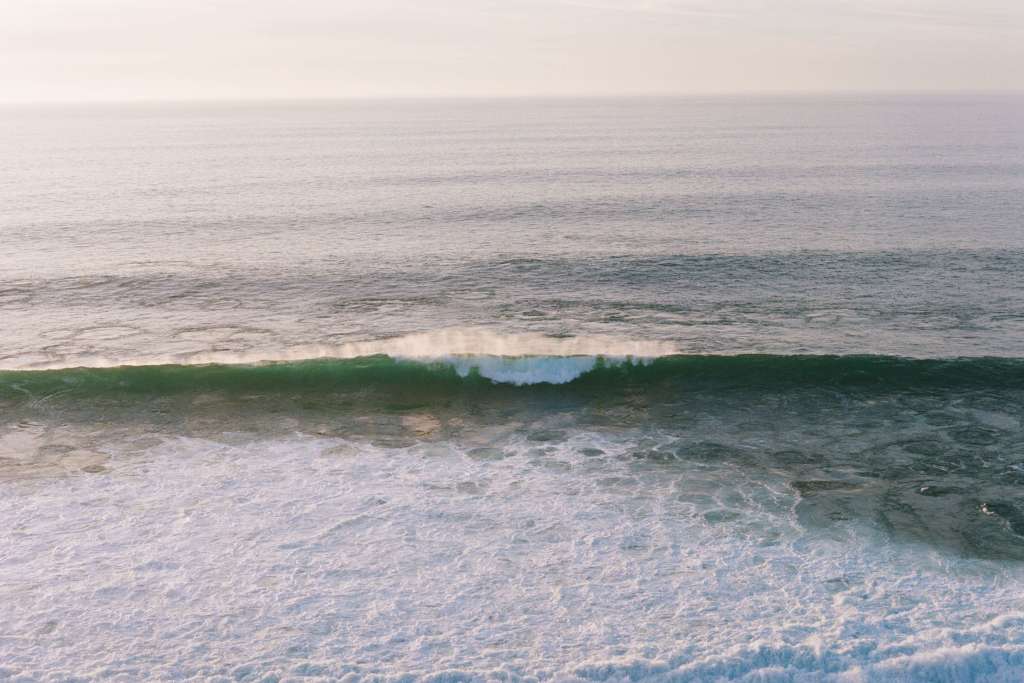
When I close my eyes and think of Biarritz in terms of color, the sea immediately comes tomind—especially the view from above La Côte des Basques. It’s an explosion of blues,greens, and greys that I’ve never seen anywhere else. At sunrise, it’s tinted with mauves and pinks, and at sunset, it turns incredible shades of orange.
You describe Biarritz as being “about pizzerias and wetsuits.” Can you elaborate on that vibe?
What makes Biarritz special is the mix of its architecture, which recalls the glamour ofanother era, with a very laid-back, relaxed vibe. It’s the kind of place where people go not tobe seen—because no one really cares about that. You can walk barefoot from the beach and stop for a crepe on your way home.
What foods are emblematic of Biarritz, and where are your favorite places to eat them?
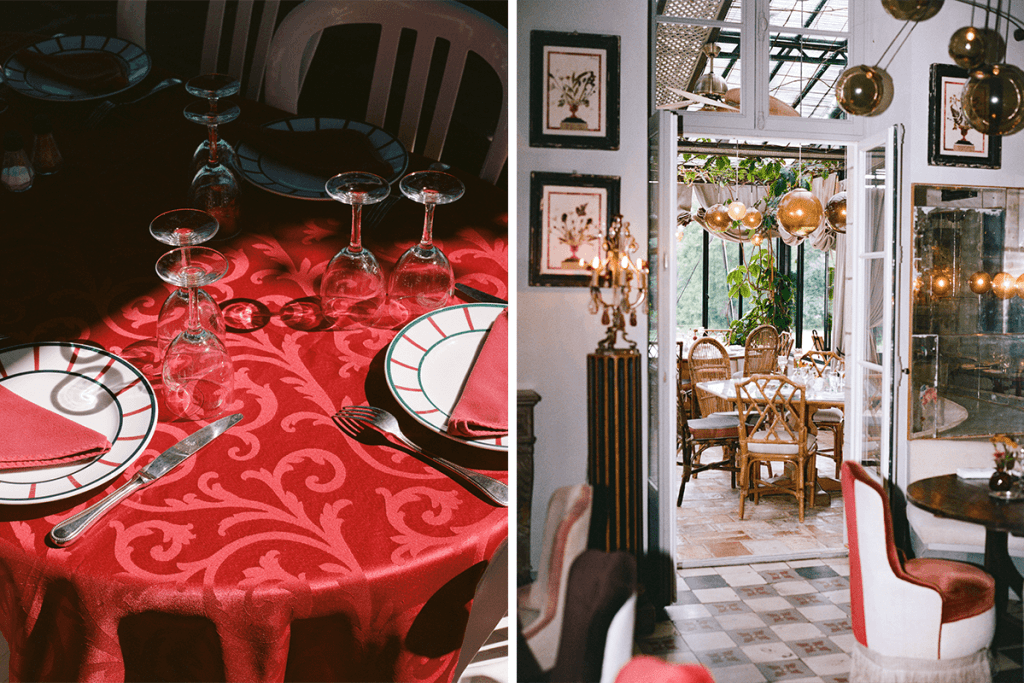
In the city, I love Cheri Bibi, located in a very cozy neighborhood of small houses nestled side by side, called Bibi Beaurivage. They have a small menu with simple yet surprisingly flavorful dishes, and the atmosphere is incredibly relaxed.Also right in the city center, on Rue Gambetta (which is now pedestrian-only), I love Le Bistrot du Haou. It serves simple yet exquisite French food—perfect for a weekday meal. L’Auberge d’Achtal in Arcangues is a classic spot we’ve been going to all our lives—especially for summer dinners under the plane trees, while the kids run around the large fronton until the food arrives. The duck, the fries, and the mushroom omelettes are musts. I personally love the fine herb omelette (my family always teased me for being the boring one… but I’ve always loved it). Of course, Gaztelur, our family adventure that we opened ten years ago—a restaurant and antiques boutique in Arcangues—is also a must. The place is an experience in itself, nestled in Arcangues, surrounded by forest and facing a large meadow. David and Borja, who lead the kitchen, make the best grilled fish and the best rice dishes in the area, among many other things.
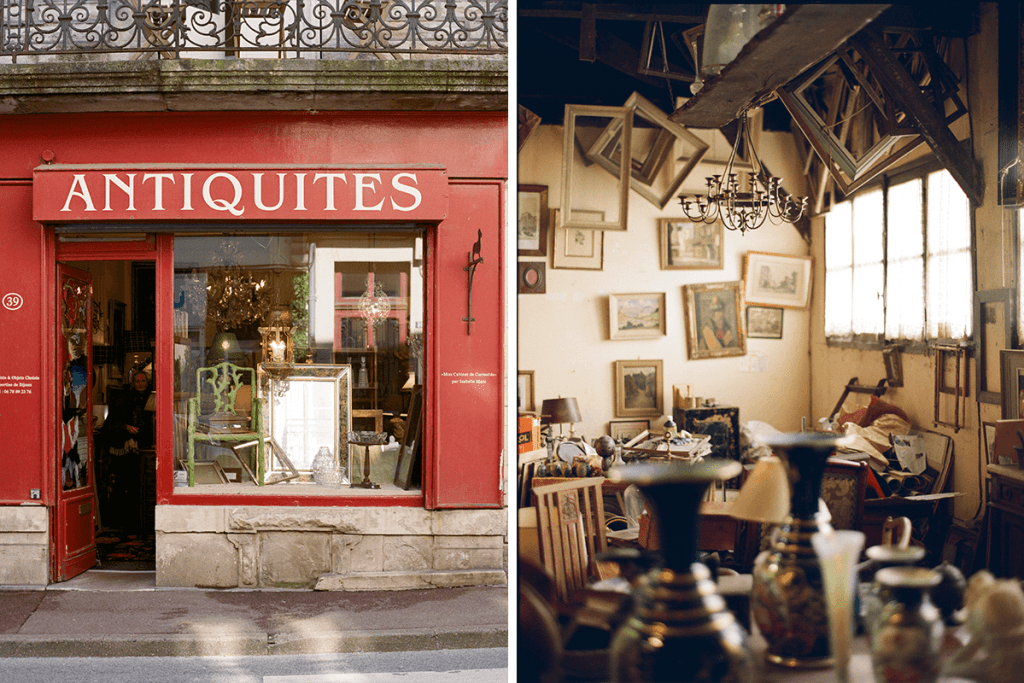
You mention browsing flea markets and antiques shops—given your profession, you must have an especially great list! Would you share a few?
Like true French locals, brocantes and vide-greniers are a regular part of life here. Every weekend, there’s one in a nearby village—Ahetze, Arcangues, Guéthary… Sometimes we venture a bit further, even as far as Bordeaux, where there are two great fairs each year, in autumn and spring, that are really worth visiting. Beyond the brocantes, many afternoons we walk from home to the village for our usual visit to our antique dealer friends Pierre Julien and Isabelle Marc to see what they’ve recently found. More often than not, we leave with something tucked under our arm—and always with a fascinating story about a piece of furniture or a special object.
Where do you recommend that friends stay? Are there a couple of hotels that best capture the spirit of the place?
I love having my friends stay at our house, but when I recommend hotels, I usually tell them to go to Hotel Silhouette—it’s right by the market, in the heart of Biarritz, and the area is lively all year round, both during the day and at night, with lots of locals. Hotel de la Plage is also nearby, right on the seafront. It has a super relaxed vibe and you can take a morning swim at La Petite Plage with hardly anyone around. You’ll only run into the “Ours Blancs,” a group of swimmers—some young, some not so young (the oldest are over 80!)—who swim there every day of the year. Thanks to them, if I’m in Biarritz on December 31, I always go for a swim!
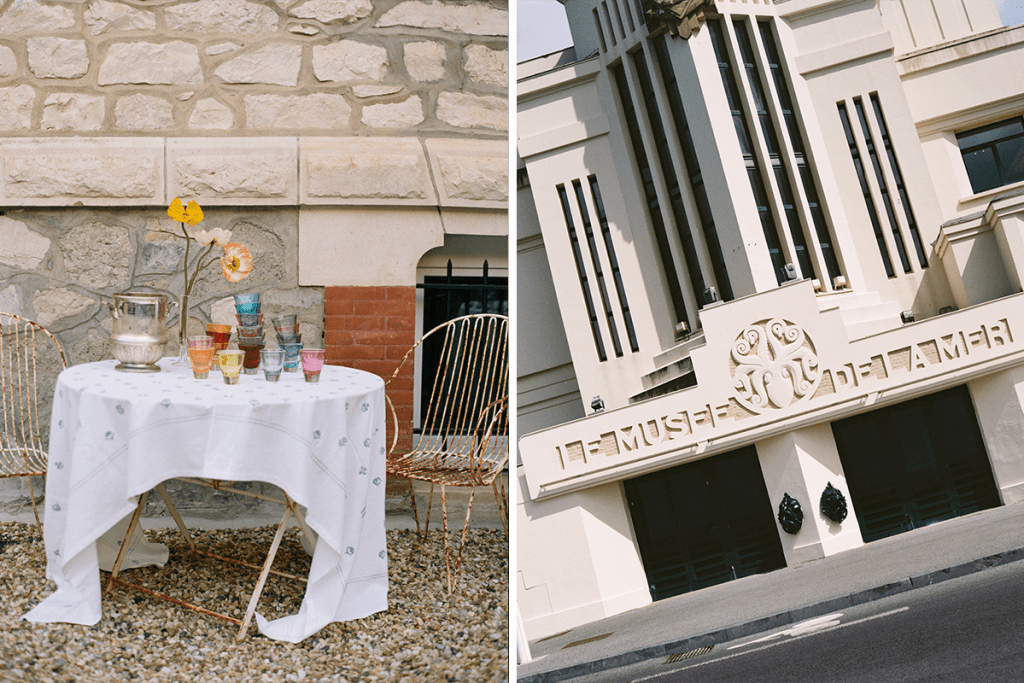
You have lots of photographs of children—I assume they are yours? What are some favorite activities for kids?
Yes! They’re my daughters, but there are also a few nieces. What I love about Biarritz is how much time you spend together as a family. We play paddle ball on the beach, catch waves with bodyboards, and go crab fishing. There’s a plan we’ve done for generations when it rains (because you should know—it does rain sometimes!) which is to visit the Aquarium, or the Musée de la Mer as it’s called there. We’ve spent hours watching fish, jellyfish, and seals—I loved it as a child, and my daughters love it now. There’s also a zipline park in Chiberta, which is a big hit.
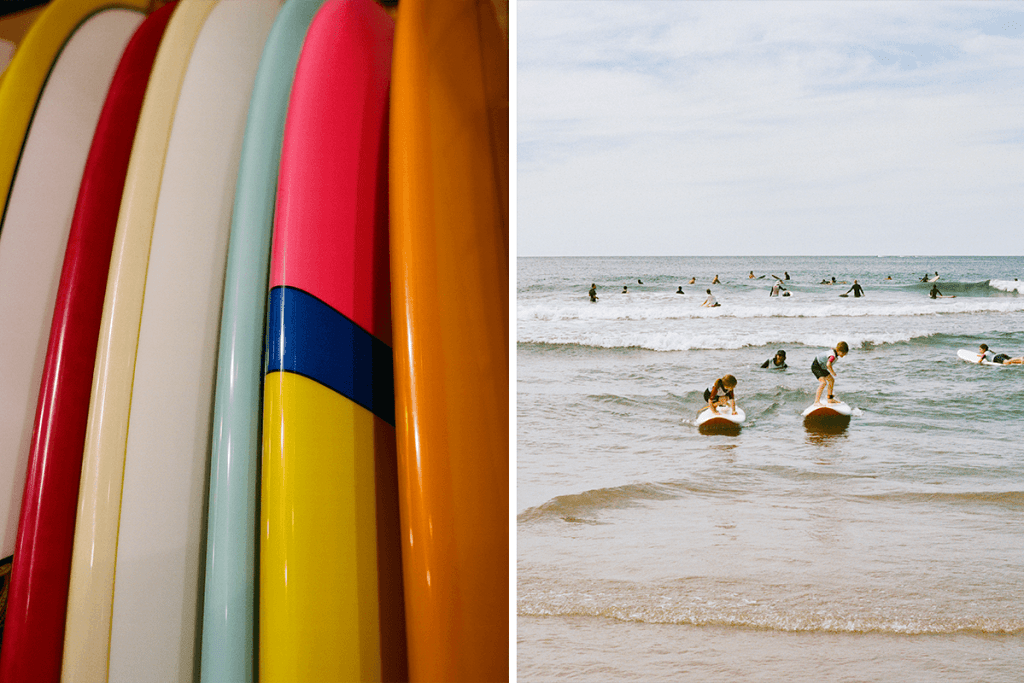
What beaches would you recommend for swimming vs. surfing, and is there a place you’d recommend at each—favorite restaurant, beach club, etc.?
Biarritz is actually where surfing first started in Europe, when the Americans came to film a movie and brought a surfboard with them. Since then, thousands of surfers have come here throughout the year. For surfing, it depends on your level. For advanced surfers, there’s a legendary spot in Guéthary called Parlementia. For beginners, Côte des Basques is perfect. For swimming, I recommend La Petite Plage, right in the center of Biarritz, past the Atalaya—it’s a little cove nestled between rocks that opens onto a very small beach where you can usually swim, as the sea tends to be much calmer there. I also love the endless beaches of Anglet—La Madrague, Les Corsaires, L’Océan… They’re just past the Biarritz lighthouse and are more like the long, wide beaches of Les Landes. They remind me of my childhood, because we used to meet my grandparents there every morning. Even though the lifeguards are really well-trained, you still need to respect the sea in Biarritz—it can surprise you if you’re not careful. There’s a beach bar I love on La Plage de l’Océan called Oceanoa—it’s the perfect spot to grab something to eat with your feet in the sand.
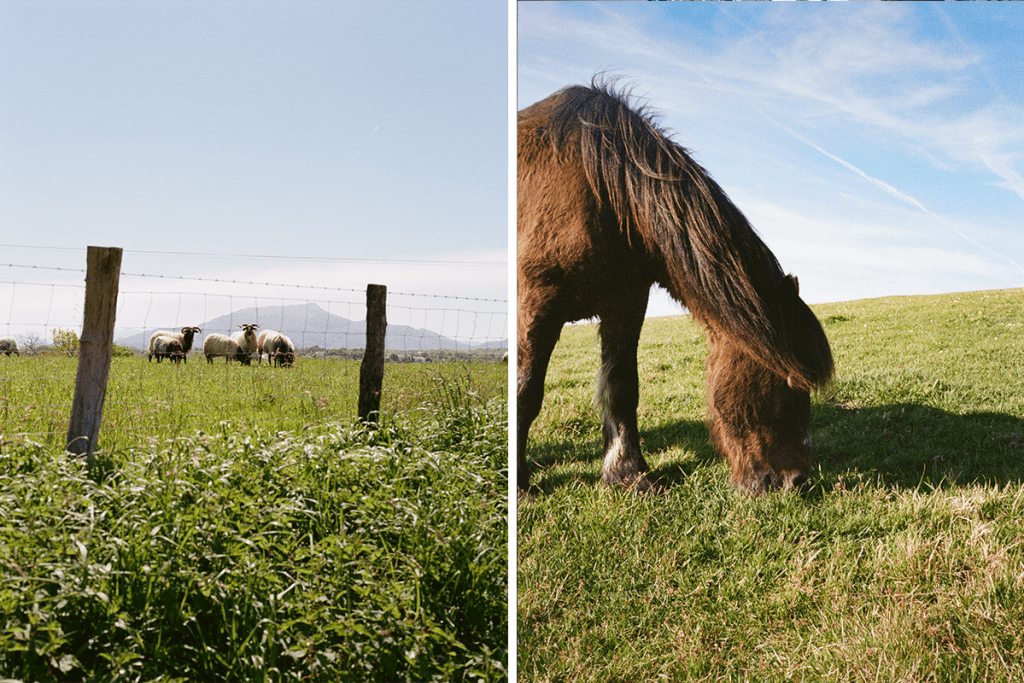
What is the origin of the wild horses you photographed in your book? Is there a place to see these?
The Potoks are a breed of small wild horses that date back to the Paleolithic era and can still be found grazing in the Pyrenees. There’s a very well-known and beautiful hike from Ascain to the peak of La Rhune. It’s about 10 km with an 800 m elevation gain, and you’re almost guaranteed to spot Potoks along the way.
What are some other sights that a visitor should be sure to see while here?
Beyond Biarritz, there are many nearby villages that are worth visiting. Heading toward Spain along the Corniche Road, you’ll find Bidart, Guéthary, and Saint-Jean-de-Luz. Inland, you shouldn’t miss Ahetze (I actually got married there), Arbonne, Arcangues, and a bit further, Sare. Espelette is another beautiful village, famous for the chili pepper that carries its name.
You photograph a number of objects in the book. What is the significance of these and how are they emblematic of the place you love?
I wanted to dedicate part of the book to objects themselves—that’s the idea behind the “Vocabulary of Objects” section in the middle. Objects are a fundamental part of my work. Beyond their intrinsic beauty, they tell stories and bring soul to interiors. The objects in the book are chosen for the emotion they evoke. I love them for their colors, shapes, or materials, but also for what they represent. For the story they carried before reaching me, and for the story they now have in my life. For example, the ceramic Stilton cheese cover that has always sat on our breakfast counter at home, or the large Baccarat perfume bottle on the cover, which I bought from an antiques dealer friend whom I greatly admire.
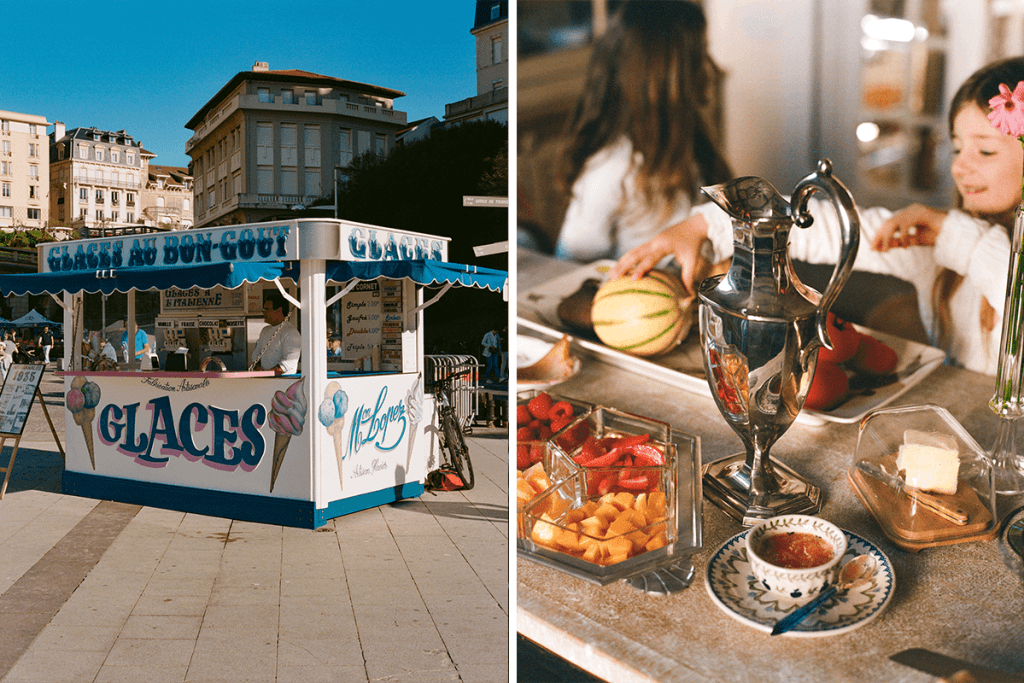
One theme you explore is “the beauty of small things.” Hot takes: what are some small things that stand out for you?
Yes, Biarritz has taught me to truly enjoy the small things:
• Going to the market and choosing the perfect cantaloupe for breakfast
• The feeling of putting on a sweater on a summer evening
• Setting a beautiful table
• Taking the time to enjoy breakfast
• Watching a cloudless sunset eating an ice cream from Monsieur Lopez
• Or witnessing an enormous thunderstorm that feels like the world is about to end
Leave a Reply
You must be logged in to post a comment.