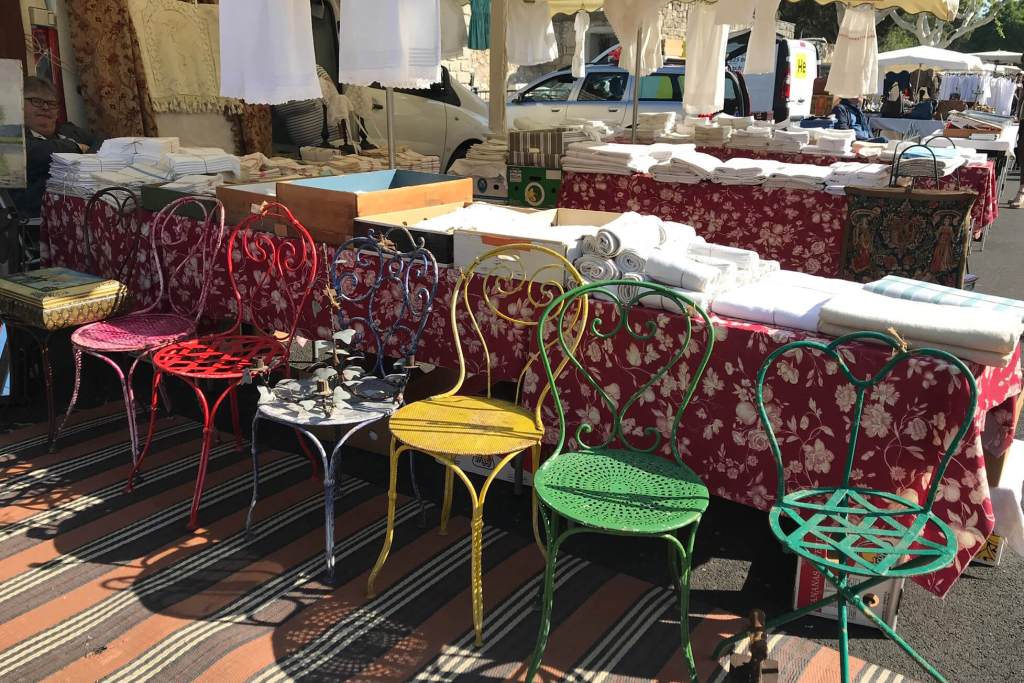
It’s no secret that my husband, Matt, and I are pretty obsessed with all things vintage. We collect (some might say hoard) many things: ceramics, brass candlesticks, postcards, signage, flags, French farm smocks, linens, bedside lamps… and that’s just a start. I’m not sure if the collecting drove us to buy a house in the Médoc region of France, or if the house spurred more obsessive collecting. But either way, there you have it—we are collectors.
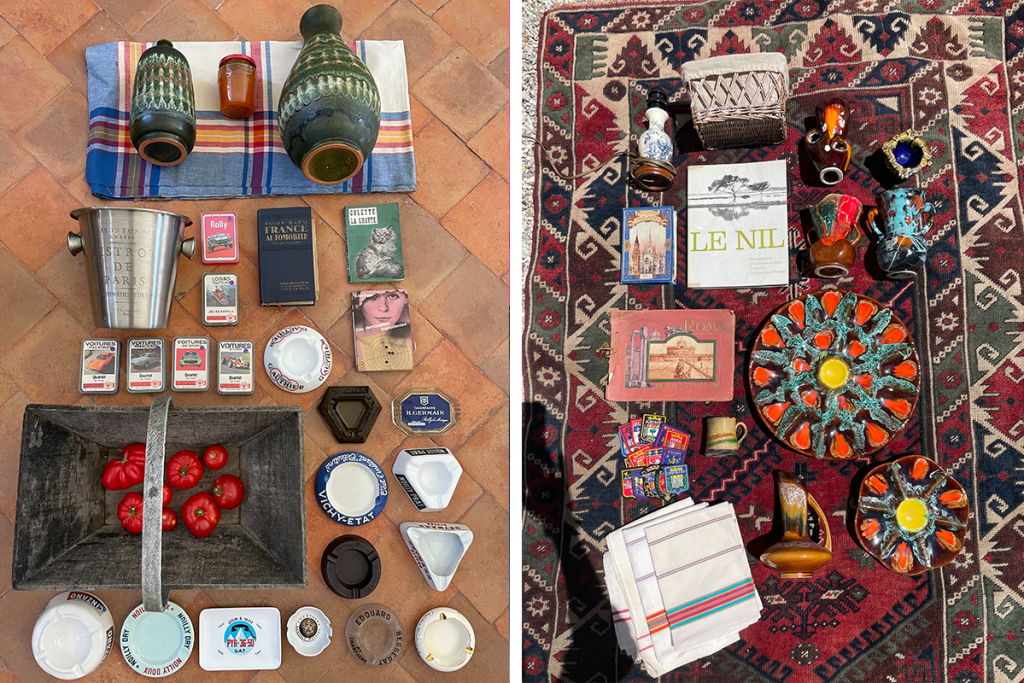
Many people ask us how we do it. How do we know where to go, where do we find all of these amazing markets, and how do we decide what to buy? Really, it’s just about obsessive planning. As soon as I know we’re going to be in France, I start researching what markets may be happening around wherever we’re going to be. And so with summer on the horizon, I thought it would be fun to put together a crib sheet here, with a list broken out by region, and organized chronologically within each. Perhaps it’s a part of my secret long-term goal to convert more souls to move here!
If you’re not in the design/antiques world, and this is the first time you’re thinking about doing something like this, here’s a little primer.
Categories of flea markets
Vide-greniers: Basically a village garage sale, which are typically held in summer. There are great deals to be had, but you have to go through a lot of junk, too—the sellers are all locals emptying their attics and barns.
Brocantes: Antiques markets with professional vendors, usually held several times a year in a given place (though there are also year-round antiques stores that call themselves brocantes).
Marché aux puces: Similar to brocantes in that the vendors are usually professionals, but these tend to be permanent and in more urban areas.
If you’re looking to ship things home, you should probably skip the vide-greniers, unless you have a hotel that is really helpful. Most of the bigger markets will have a shipping person who can handle your delivery.
Bargaining?!
I bargain in most situations. It’s always done respectfully–and vendors expect it. But study up on your French numbers. It’s really hard to ask for a deal if you don’t know how to say the number back in French. If someone says “cinquante” and you don’t understand, or repeat back in English, you’re already seen as a tourist and are viewed as someone who they can get more out of. Just learn your numbers 1 to 100! I don’t have a general rule for these negotiations—I just go by my gut. If I really want something and they won’t move on it, I just pay the asking price. It’s common sense, really. And if there’s something you don’t really want unless it’s a certain price, just name the price and stick to it. Always be polite, and always have cash on you. Some of the higher-end markets will have vendors who take credit cards, but the vide-greniers? Forget it. My favorite bargain story of all time: I was at an agricultural fair with a vide-grenier in Lesparre, near where we live. There was a local who had a tall stack of beautiful ceramic oyster plates—12 in total. I asked him how much he wanted for them and he said 1 euro, to which I replied, for one? No, for all. I didn’t need them, but I am their proud owner now, and they make me very happy.
Finding the markets
The Brocabrac.fr site and app is amazing; you can search by location and it pulls up every market and antiques shop in the vicinity, with dates, times, and number of vendors. This is key, because you don’t want to travel a long way for just 25 vendors. Matt and I always cross-reference with the site Vide-Greniers.org, and also just Google “brocante near me” and “vide grenier near me.” There’s also a great website, Fleamapket, which gives you the scoop on each market—how many vendors, what they’re known for, etc, but a lot of their content is paywalled. My Brocante is also helpful, and so are Facebook groups (just search “Brocante Normandy” or wherever you’re going), if you want to get really granular and find the ones that would never show up in Google results. But this list will give you a great head start—happy hunting! —Yolanda
P.S. If you know you’ll be bringing back a few new acquisitions from your trip, consider our list of foldable, lightweight bags that you can pack in your luggage to bring your haul home.
Subscribe to YOLO Intel to read the full story.
Digital subscribers can access our entire archive of content, including Black Books, Travel Planners, Guest Books and destination lists.
to access premium content and manage your account.

Leave a Reply
You must be logged in to post a comment.