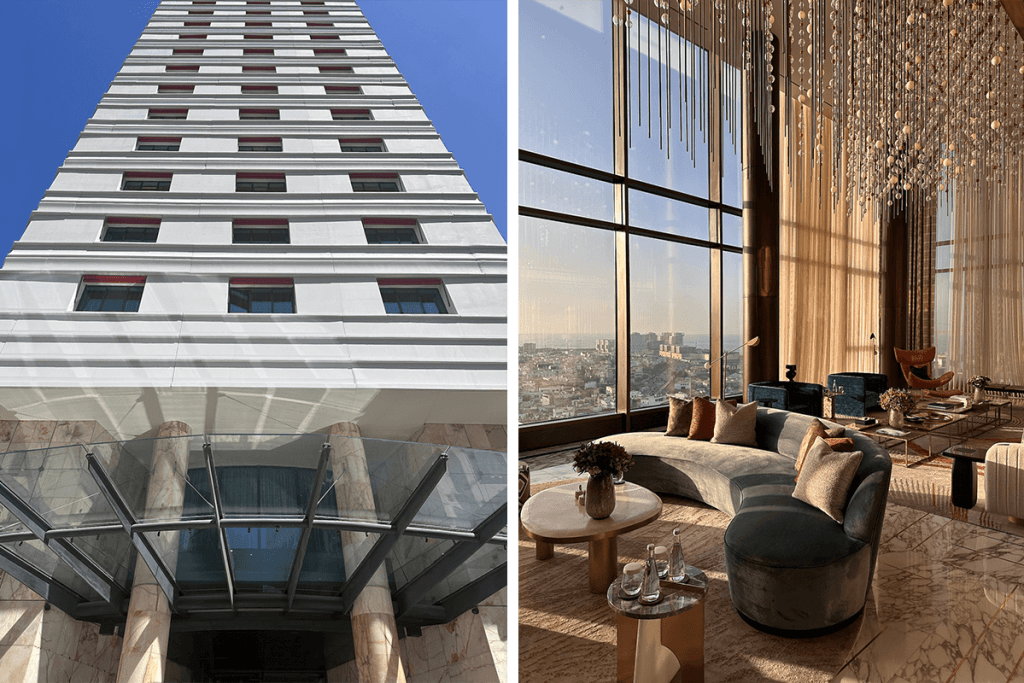
In short… A sleek and sumptuous stay in a historic Art Deco building that just might, on its own, make a case for visiting Casablanca.
The surroundings… Morocco’s largest port and commercial capital isn’t usually at the top of travelers’ leisure lists, though arguably it should be. While it looks nothing like the Hollywood mirage (the film was shot on a studio lot), the real city has its own magnetism: gleaming white Art Deco facades, a maze-like old medina, a seaside promenade—the Croisette—shared by joggers and beachgoers, and the magnificent Hassan II Mosque towering over the Atlantic. The Royal Mansour Casablanca sits near all of it, in the Le Petit Paris district, a palm-lined boulevard of white modernist buildings laid out by French planners during the protectorate era (1912-56).
The backstory… The hotel originally known simply as El Mansour was designed by French architect Jean François Zevaco and opened in 1953 as the city’s first 5-star property. Decades later, it was acquired by the Moroccan royal family and reimagined, 14 years after the Royal Mansour Marrakech, as a showcase of Moroccan craftsmanship, design and hospitality. In Casablanca, the vision was also to help transform the country’s bustling port city into a true vacation destination. After an eight-year renovation, the Royal Mansour Casablanca reopened in April 2024 with a quietly opulent design (including 70 kinds of marble!), while staying true to Zevaco’s original spirit, down to the nostalgic red window awnings. Locals, I was told, still stop by to visit the lobby patio, once known as the “winter garden,” where they remember sipping hot chocolate with their grandparents.
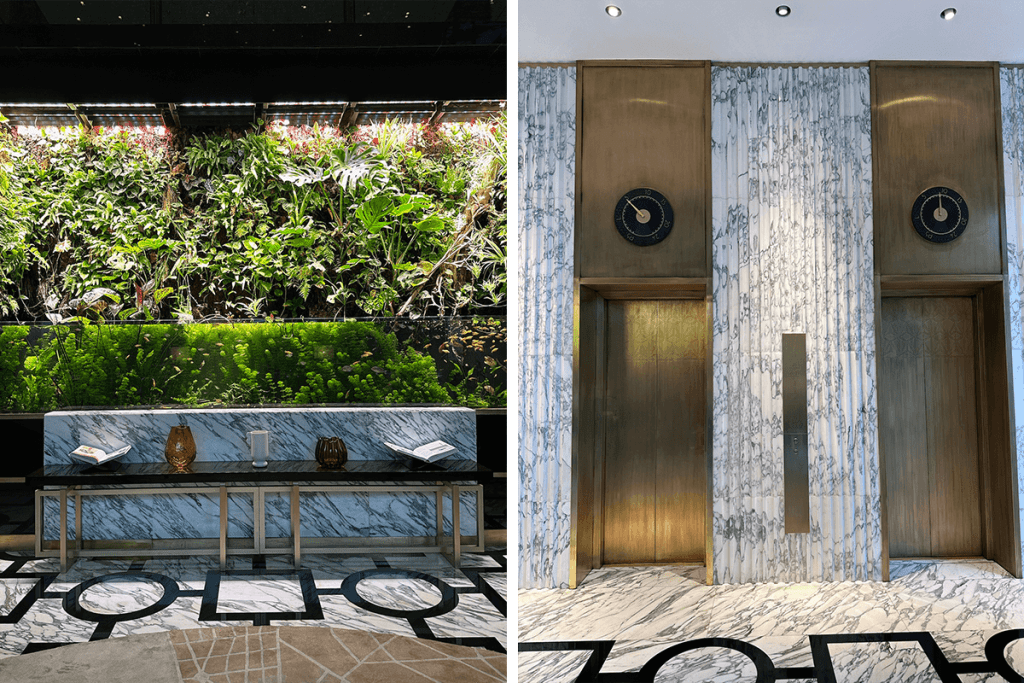
The vibe… Classy not flashy. Where Royal Mansour Marrakech feels like a living museum of Moroccan craft—zellige tile, chiseled stucco, carved cedar—Casablanca is sleeker and more urbane. At the tower’s corner entrance, uniformed guards in fedoras stand at attention with royal formality, but once inside, the mood is welcoming and even cinematic. Well-dressed guests and locals sit or mill about the light-filled marble lobby, which is centered around a movie-screen-size aquarium and a chandelier of 600 glass fish, both nods to the city’s maritime history. At the sultry lobby-level Bar Diplomate, a tiled mosaic mural of the city recalls its 1950s heyday. I especially loved the four Art Deco-style elevators with retro floor dials, which open and close so silently you need to bust a move to get in before being swept up to your room.
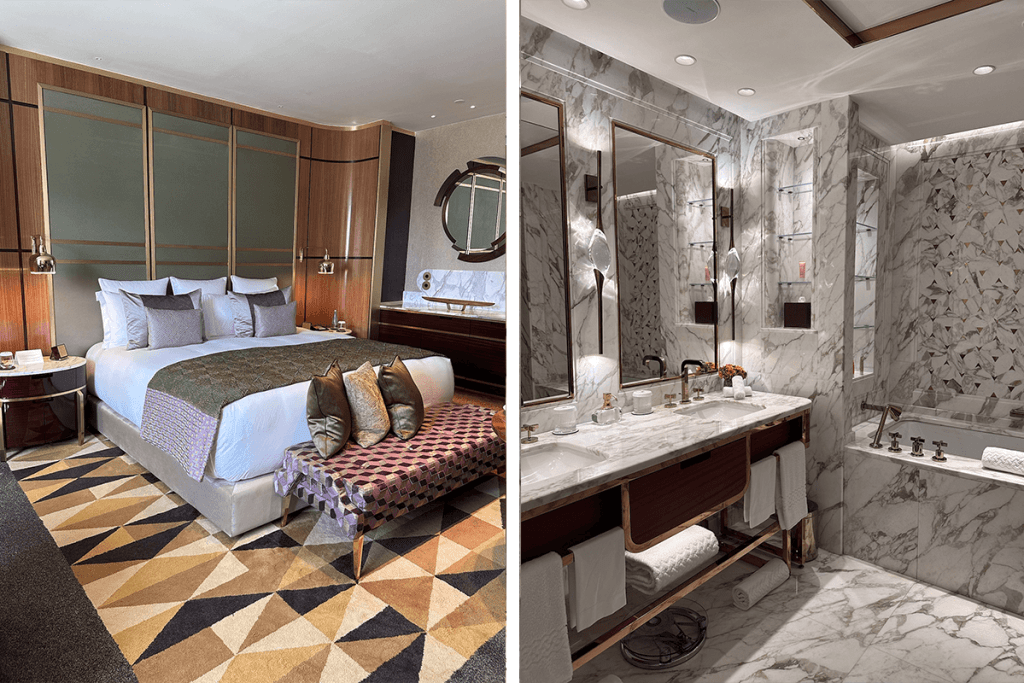
The rooms… The room I stayed in, 1705, is one of the hotel’s 13 Signature Suites (there are 149 rooms and suites in total), with sweeping views over Casablanca’s rooftops and, in the distance, the towering Hassan II Mosque. With curved mahogany and inlaid brass wrapping the walls and custom furnishings, the suite at first reads masculine and slightly corporate—in fact, every room comes with a valet stand, watch winder in the closet, and even a printer and shredder built into the desk. But the vibe softens in the details: the palette of moss green and aubergine, the analog brass light switches that are (so rare!) easy to use, handblown glassware in sultry colors, and even a leather-wrapped Nespresso machine with large (hooray) ceramic coffee mugs were all perfection. Useful for longer stays: a small pantry with both a wine fridge and proper refrigerator. My favorite space was the large bathroom, which felt glamorously wrapped in streaked marble with the shower and toilet areas divided by panels of patterned cut glass (even the hand-soap is dispensed in a heavy crystal decanter). It’s sumptuous but not ostentatious, all just beautifully made.
I also got a voyeuristic peek into the Royal Suite—a 1,200 square-meter, 4-bedroom apartment with its own elevator lined in Hermès-style stitched leather, a private gym, and an insane view of the city all the way to the sea. Fit for actual royalty, Hollywood royalty, or those aspiring, it felt impeccably refined without being OTT.
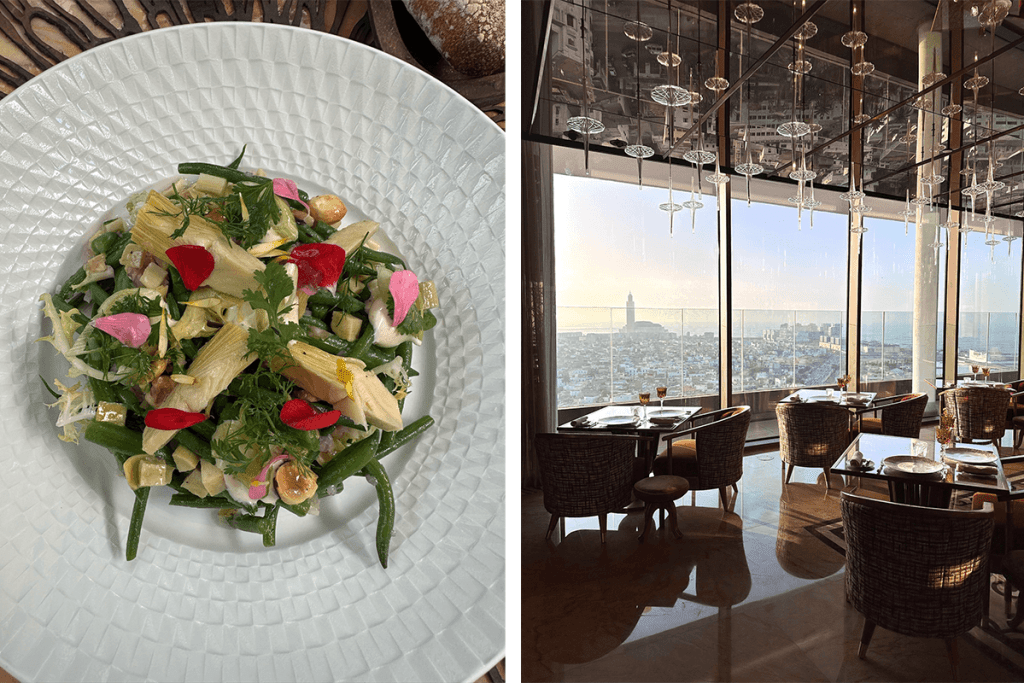
The food & drink… The hotel’s four restaurants each nod to local culture. I had lovely lunch at The Brasserie, an all-day French-inspired restaurant on the ground floor atrium, a leafy and peaceful fountain-cooled courtyard serving refined and locally sourced comfort food—green beans and artichoke salad followed by a delicious sole from Daklha “a la plancha.”
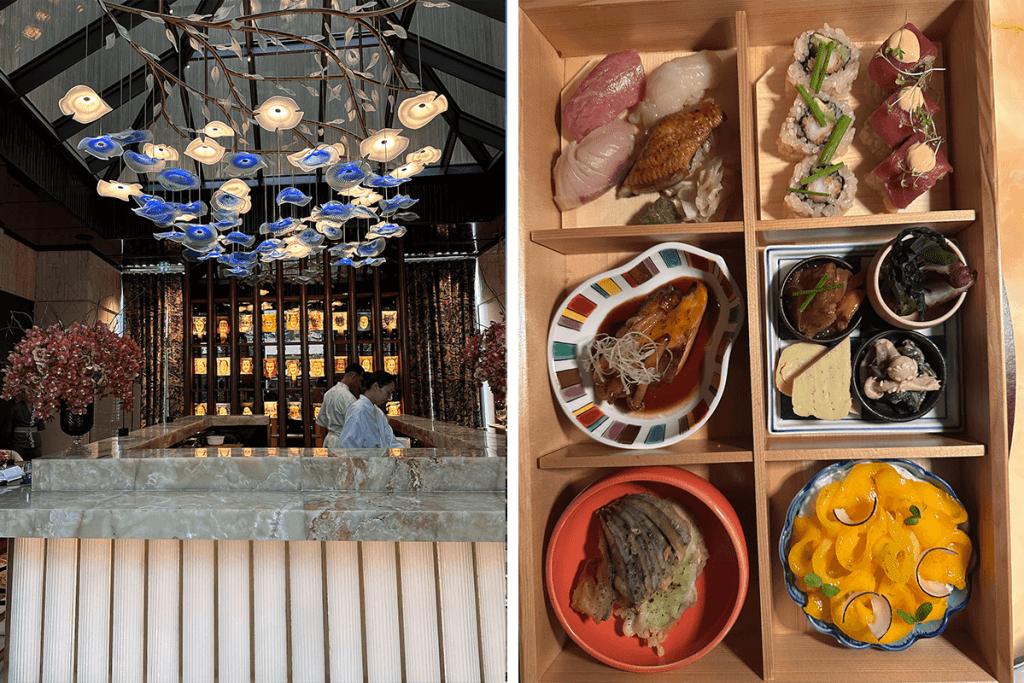
Dinner on my first night was at Le Sushi Bar on the lobby level, which draws a local crowd for chef Keiji Matoba’s elaborate omakase menu. I wasn’t that hungry after my late lunch, so they offered to make me a lunch-only bento box—possibly the best I’ve ever had, a jewel box of tempuras, maki and sushi, finished with the creamiest rice pudding with coconut and mango. If you order sake, you can choose between three shapes of glasses, each designed to enhance the flavor.
The other two restaurants are on the 23rd floor, with panoramic views from every angle. Le Rooftop, the Mediterranean option, was closed for renovation, but Le Grand Table Marocain (a sibling of Marrakech’s flagship restaurant) was fantastic: live traditional music, hearty couscous and savory tajines, and a pigeon pastilla baked in a flaky pastry with almonds that was insanely good. Unlike the nearby Four Seasons, which can’t serve alcohol due to its proximity to the Mosque, the Royal Mansour has a 25,000-bottle cellar, and I definitely enjoyed my Moroccan white wine. It happened to be my birthday, and while I could barely handle the thought of dessert, the staff appeared with a rich chocolate cake and the musicians led everyone in a rousing happy birthday.
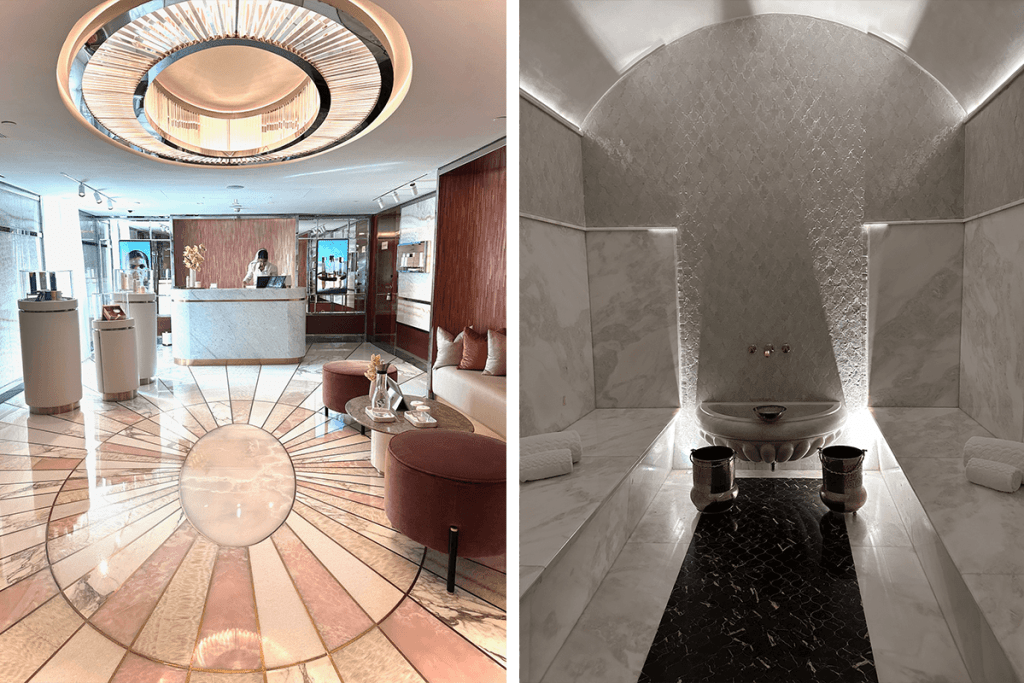
The wellness… The spa, spread across two floors (4 and 5), feels like a fantasy of a queen’s boudoir—curved pink-and-cream marble with brass details, eight treatment rooms, a hammam, soaking pool and salon. I was exhausted after a weeklong conference in Marrakech, and Melody, my therapist, delivered the most intuitive “Infinite Sensoriality” massage using Maroc-Maroc products, finishing with a facial treatment that was so effective, she showed me the visible lift halfway through. There’s also a 24/7 fitness studio with Matrix equipment, boxing sessions, and the first La Barbiere de Paris outpost outside France, run by Paris’ pioneering female barber.
Is it kid-friendly? They don’t explicitly cater to children, but I suspect kids would be very happy here.
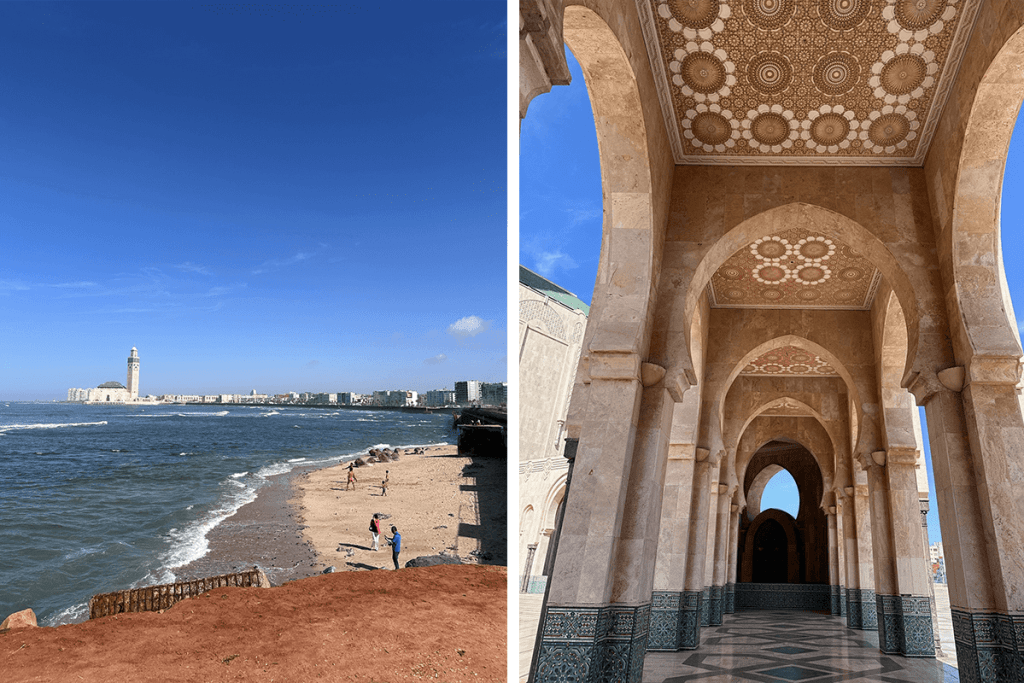
Be sure to… Take a city tour with one of the hotel’s exceptional guides. I skipped the street art and food tours for a broader city overview, led by Naima, who was knowledgeable, efficient, and very chicly dressed. We covered a huge amount of ground in a spotless Mercedes EQS driven by Siham, our female driver. Highlights included the stunning Hassan II Mosque—the world’s second largest after Mecca, completed in 1993 after six years and $1.5 billion, with its spectacular tile façade, titanium doors, carved wooden ceilings, and 42 marble ablution fountains; the Corniche, which feels almost LA-like with kids playing ball and families wading in the surf; the historic Jewish Quarter, where we stopped at a local bakery just as the call to prayer filled the narrow streets; and a final stop in Le Petit Paris for craft and argan oil shopping.
Parting words… Casablanca might not be a must-see for everyone, but the Royal Mansour makes a persuasive case for experiencing Morocco’s urban, commercial side—ideal as a gateway to or from Marrakech (a high-speed train is in the works). And the value’s impressive in low season, with entry-level deluxe rooms starting at around $640/night, a level of pampering that’s hard to beat.
Date of stay… September 13-15, 2025
Leave a Reply
You must be logged in to post a comment.