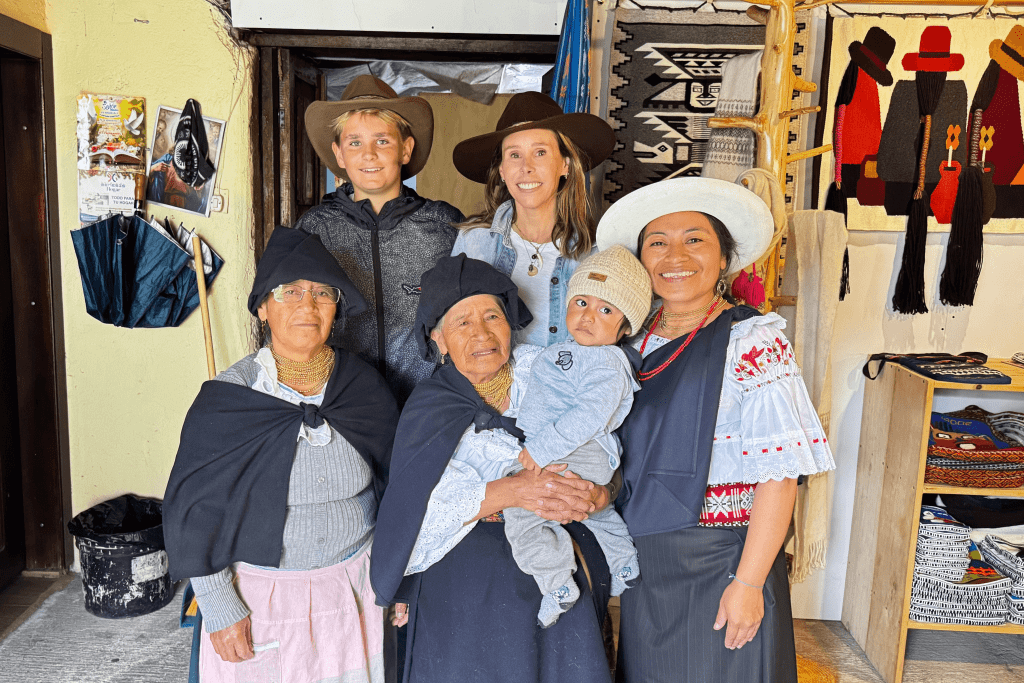
I didn’t expect to end 2024 with one of the most profound experiences of my life. My extended family had organized a long-dreamed-of adventure to the Galápagos Islands—a trip on our collective bucket list. But it was a spontaneous addition to our journey, a few unplanned days in Otavalo—a highland town deep in the Andes Mountains of Northern Ecuador—that became the unexpected heart of our adventure.
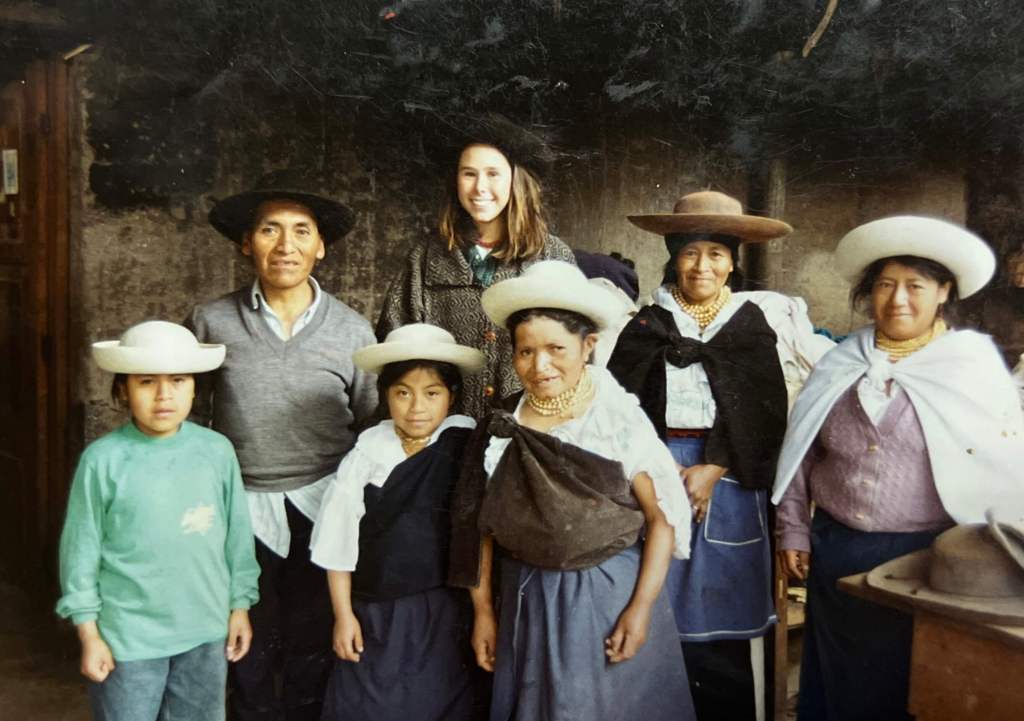
While booking our flights from California to Ecuador, I found myself thinking back to a formative summer in college that had planted the seeds for my life as a creative advocate. I could still vividly picture the vibrant craft market against a backdrop of jagged peaks, and a family of artisans who had welcomed me into their home. Despite the tug of a busy schedule, the whispers kept coming, so I decided to tack on a couple of extra days in mainland Ecuador with little more than an old photograph and the hope of finding the family I had lived with 30 years earlier.
As a college junior, I had hatched a plan with a group of friends to apply for a grant from Stanford to study in Ecuador for the summer. Everyone had their angle. As an art major, mine was the Otavalo market, one of the largest and most established indigenous craft markets in the world. I was studying art and entrepreneurship, and was curious about how tourism was shaping traditional craft. Miraculously, we got the grants.
That summer unfolded with unpredictability. In classic form, I missed my connecting flight and my group entirely. I arrived in Quito alone and managed to find a home stay. Without the modern luxury of cell phones or email, I would check in with the American Express office each day for news of their whereabouts. Eventually, I got word and boarded a bus to join my friends, who were practicing ice axe techniques in the glaciated peaks of Bolivia. Soon, we set off to conquer Cotopaxi and Chimborazo, Ecuador’s two largest volcanos.
After our climbing adventure, I traveled to Otavalo to begin my independent “research,” which consisted of walking through the Plaza de los Ponchos—a sprawling market of covered stalls and tables laden with brightly colored local textiles and crafts—and asking artisans if I could live with them. Most were puzzled. Many said no. Then one family of hat-makers from the village of Ilumán laughed and said yes. I traveled home with them to their three-walled concrete hut, where a fire pit smoked in the corner and guinea pigs scurried underfoot. I slept on a grass mat, shared meals, and learned to make hats the traditional way—felting alpaca wool, molding it over wood forms, and waiting patiently as each piece took shape over two long weeks.
The father, José Picuasi, was kind and generous; his daughter, Belen, about my age, was warm and curious. Though we shared little language—they primarily spoke Quechua—their generosity needed no translation. When I left them, I cried.
Upon returning home, I mailed them a package of photos addressed only to, “The Picuasi Family, Ilumán, Ecuador.” They had never seen a photograph of themselves. I never knew if they received it.
Fast forward to January 2025. After a magical week in the Galápagos with my extended family, I landed in Quito with a photo of 18-year-old me and the Picuasi family tucked into my journal. My sister had arranged for a local guide, Miguel, to take us the two hours north to Otavalo. I showed him the photo. He paused, smiled, and said, “I know them. They are the only family in Otavalo still making hats in the traditional way. We’re visiting their workshop tomorrow.”
I could hardly sleep that night.
The next morning, we drove north into the highlands. The landscape unfolded just as I remembered—lush hillsides, dramatic peaks, ribbons of sky unbroken by time. We arrived in Ilumán mid-morning. Belen met us at the entrance to their workshop, a small, single room hut. I showed her the photo. She stared at it, then at me, as tears welled in her eyes. We embraced. She remembered.
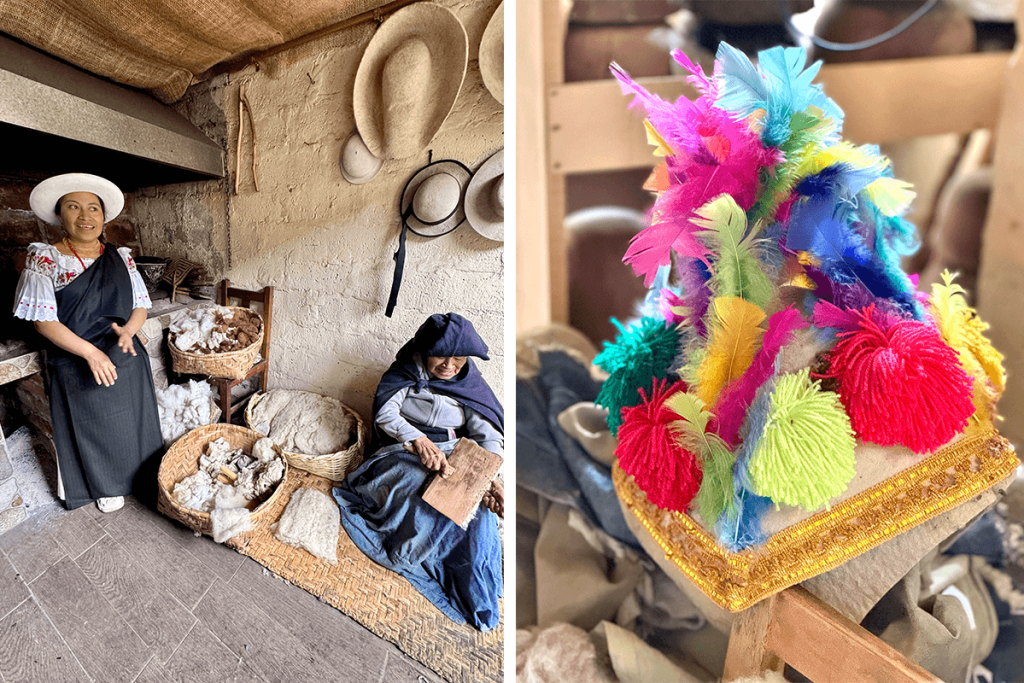
Her father had passed away not long after I’d left, but her mother, aunt and sister were there—faces almost unchanged. Belen had taken the reins of the family business and transformed it. Today she runs a thriving workshop, retail space and café, Cafetería Sumak, honoring her roots while ushering in a new generation of craft.
We toured the space, saw each step of the process, and lingered over coffee and memories. It was as if time had collapsed, as I remembered the slowness of how each day had unfolded. They instantly welcomed my 14-year-old son Freddie into their fold, making him try on multiple hats. Overwhelmed at first by this completely different world, Freddie was soon laughing and joking with Belen and her mom.
It was a moment of deep convergence—two chapters of my life folding gently into one. I reflected on who I was back then: fearless, unfiltered, driven by curiosity. And who I am now: a parent, a creator, still deeply drawn to craft, to culture, to the soul of things made by hand.
I left Ilumán once more with a full heart.
As we drove back to Quito, stopping for lunch at the serene Hacienda Cusin, I kept thinking about the beauty of revisiting a thread from the past—and discovering it still intact and even stronger, woven into the person I’ve become. I sat in the garden pondering the detour I almost didn’t take had become the true soul of this adventure.
Planning a Trip to Otavalo
Any trip to Otavalo starts in Quito, one of the highest-altitude capitals in the world. Quito’s main attractions include beautiful colonial architecture around the main square, delicious coffee, handmade chocolate and Baroque churches.
QUITO
Where we stayed
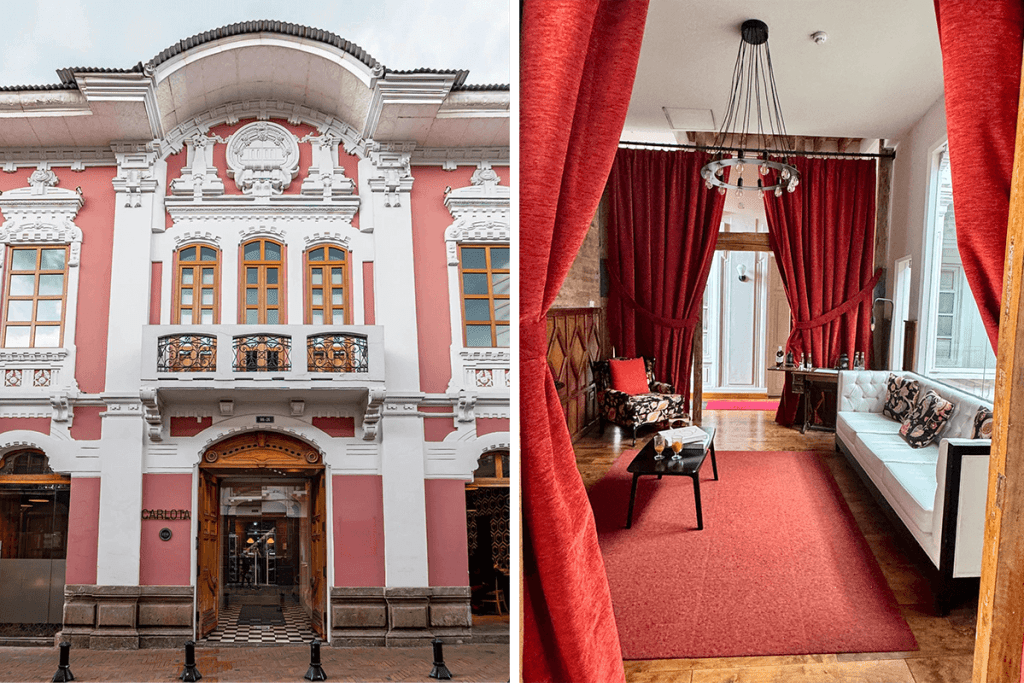
Hotel Carlota was a pleasant surprise, given the very affordable room rate. Delicious food, beautiful rooms, central location. Equipped with a whiskey and record listening area. Rooftop bar. Address: Benalcázar N6-26 and Mejía
Places to eat
We had a delicious meal, including the very popular locro de papas (potato soup), at Casa Gangotena
For breakfast and casual dinners, we loved Bistro 626 at Hotel Carlota. Standouts were the ceviche and the homemade hot sauce.
Next time I plan to try the tasting menu at Nuema, Quito’s most esteemed restaurant, created by chef Alejandro Chamorro.
Activities
Tour of Baroque churches such as Iglesia de la Compania de Jesus
Chocolate tour and hands-on chocolate making at Laboratorio del Chocolato by local chocolate purveyor Republica Del Cacao.
Sample the local coffee at Cafeteria Dulceria Colonial.
OTAVALO

Imagine an explosion of colors and craft as far as your eye can see, all surrounded by the stunning backdrop of the Andes. Otavalo, the largest indigenous craft market in Latin America, is a sensory feast. Located in Plaza de los Panchos, the market is open daily, and you will see the locals maintaining and celebrating their Kichwa culture, with brightly colored clothing and traditional hats. Each of the surrounding villages is home to a distinct Andean craft. San Antonio is known for intricate wood carvings; Cotacachi is expert in leatherwork, including many wallets and belts; and Agato and Peguche are renowned for weaving. Iluman is known for weaving and, of course, traditional hat making.
While some of the items sold in the market can look a bit generic, given the influence of tourism and the commercialization that has happened over the years, there are a few standout categories to look out for, including woven bags, silver jewelry, and Belen’s custom-felted hats.
Places to stay
Between Quito and Otavalo
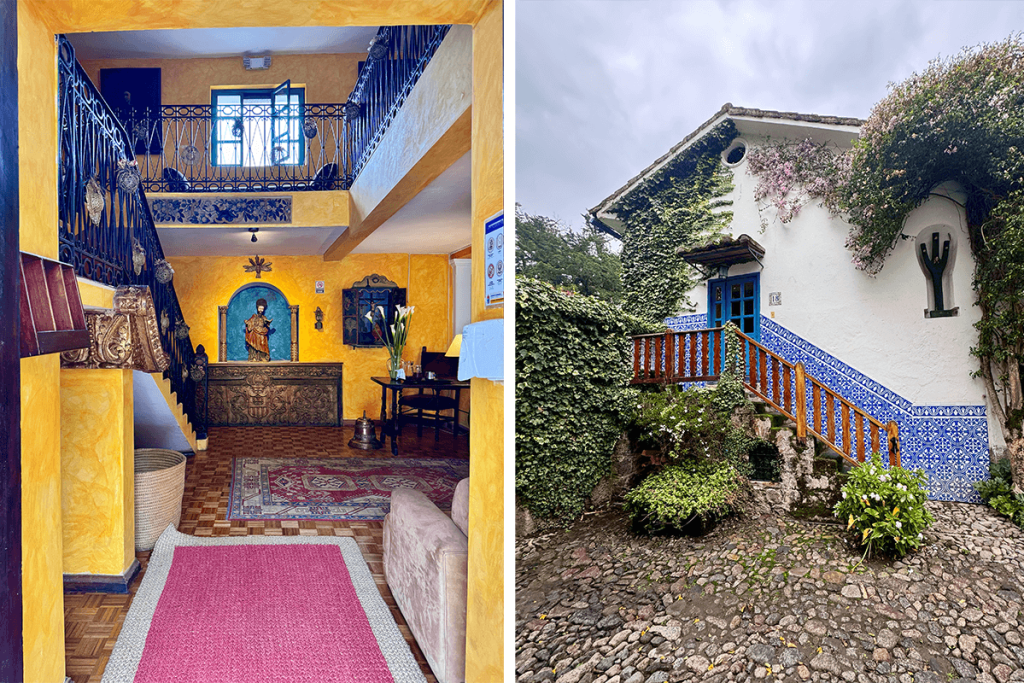
Hacienda Cusin – The next time I return, I will stay at this restored 17th-century estate outside of Otavalo. Beautiful grounds, delicious food and great service. Activities include cooking classes, horseback riding and mountain biking.
Hacienda Zuleta – A 17th-century villa and working farm, owned by the former President of Ecuador. Features beautiful antique rooms, farm-to-table food, and interesting activities such as embroidery and cooking classes.
In Otavalo
Hotel Otavalo – A colonial-style, beautifully restored hotel in the center of town, built in the 1930s. Features include delicious local food, chocolate tasting and a rooftop bar.
Places to eat
The local cuisine of Otavalo is rich, flavorful, and hearty, often featuring potatoes, maize and pork, accompanied with beans and traditional sauces. Here are a few of my favorite cafes and restaurants:
Sisa – Adorable coffee bar and bookstore downstairs, with a restaurant on the second floor. Features live folk music on Friday, Saturday and Sundays. Abdon Calderon 409
Mi Otavalito – Local, fresh cuisine one block from the plaza. Delicious ‘lomo a la plancha’ (beef tenderloin).
Cafeteria Sumak Rasu – Belen and her family opened this cafe during the pandemic, when hat sales floundered. The cafe features desserts and ice cream made with the fruits of the region, as well as delicious specialty coffee from the Imbabura province (truly the best I had in Ecuador).
Places to visit
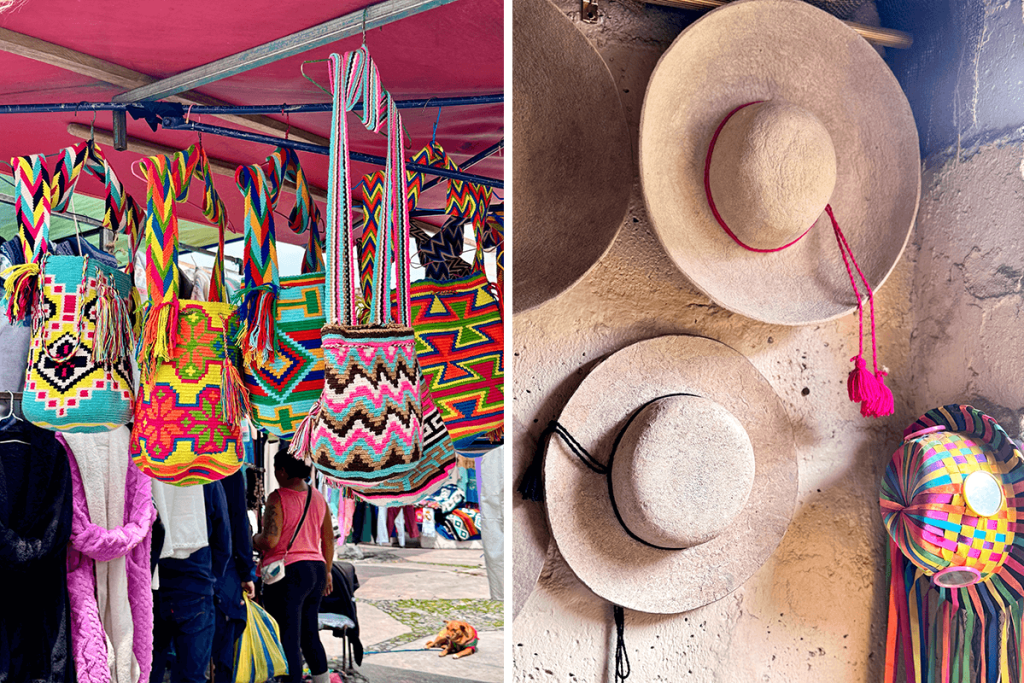
Otavalo Market – Plaza de los Ponchos, open every day of the week. The busiest days are Wednesdays and Saturdays.
Boutique Unay Muchiku – The Picuasi family’s hat-making workshop and retail space, featuring handmade alpaca and sheep wool hats, as well as ponchos and scarves. They are the last family making hats in the traditional way in this region, and it is truly inspiring to see the painstaking steps and details passed down from generation to generation. Belen and her family will show you every step of the process and then help you find your perfect hat. Entre Shyris y Antonio Esparza, Iluman Insta: @boutique_unaymuchiku
Museo Viviente Otavalango – Museum showcasing historical and contemporary Otavaleno craft
If the Galápagos is on your bucket list (and it absolutely should be), consider setting aside a few extra days to experience the vibrant cultural tapestry of Otavalo, after a few days in Quito. Returning now, I’m deeply moved by how this artistic heritage continues—evolving with ingenuity and entrepreneurial spirit, yet still rooted in generations of wisdom and artistry.


Leave a Reply
You must be logged in to post a comment.