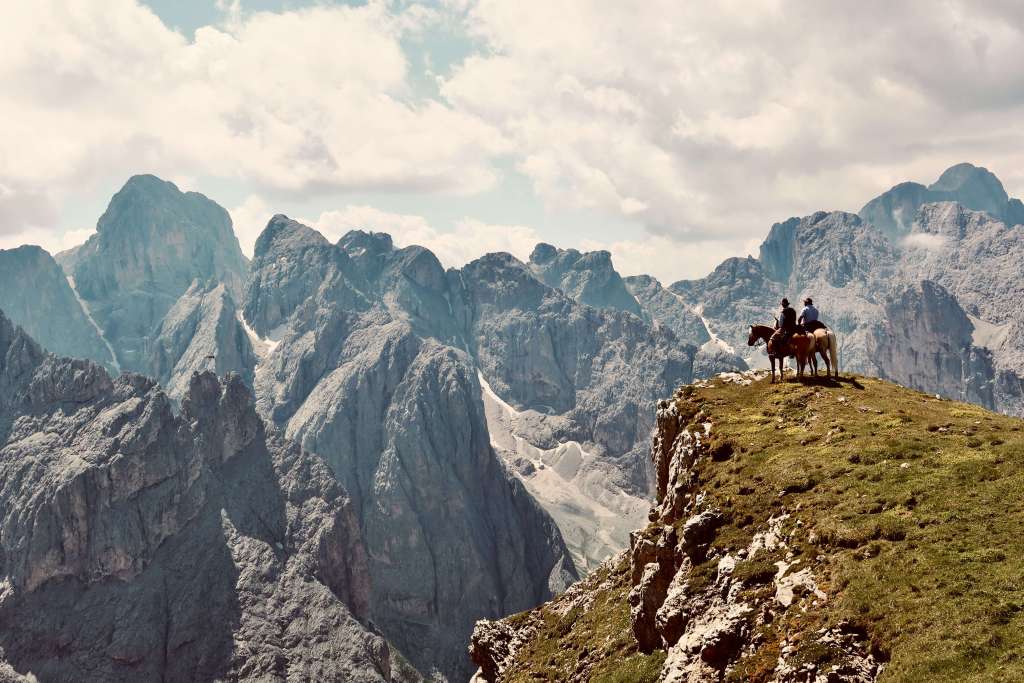
I was in a state of high excitement. It was August in the South Tyrolean Dolomites, a region in Northern Italy, which I had eagerly planned to explore with my family for hiking and mountain biking. These pursuits are just some of the many highlights of high-summer days spent in this landscape. Nestled among towering peaks and lush valleys, this part of Italy is often celebrated for its world-class ski terrain (almost 750 miles of slopes in the Dolomiti Superski), complemented by exceptional lodging and tantalizing food.
My plans unfolded smoothly: we hiked some of the most majestic peaks surrounding Corvara, a picturesque village in South Tyrol about 25 miles east of Bolzano, where we based ourselves. We also mountain biked the exhilarating Sella Ronda tour, famous worldwide for its breathtaking routes. Between hikes and rides, we posted up at mountain bars sipping espresso, before indulging in spectacular lunches at some of the region’s charming rifugi.
However, the itinerary shifted unexpectedly. A few days into my stay, I learned of an Italian leading an extraordinary horseback riding route nearby. As a passionate rider, the prospect of exploring remote pockets of the Dolomites—trekking from the back of a horse through towering peaks and deep gorges—was irresistible. For a couple of days, my family remained in Corvara while I embarked on one of Europe’s most remarkable horseback riding expeditions.
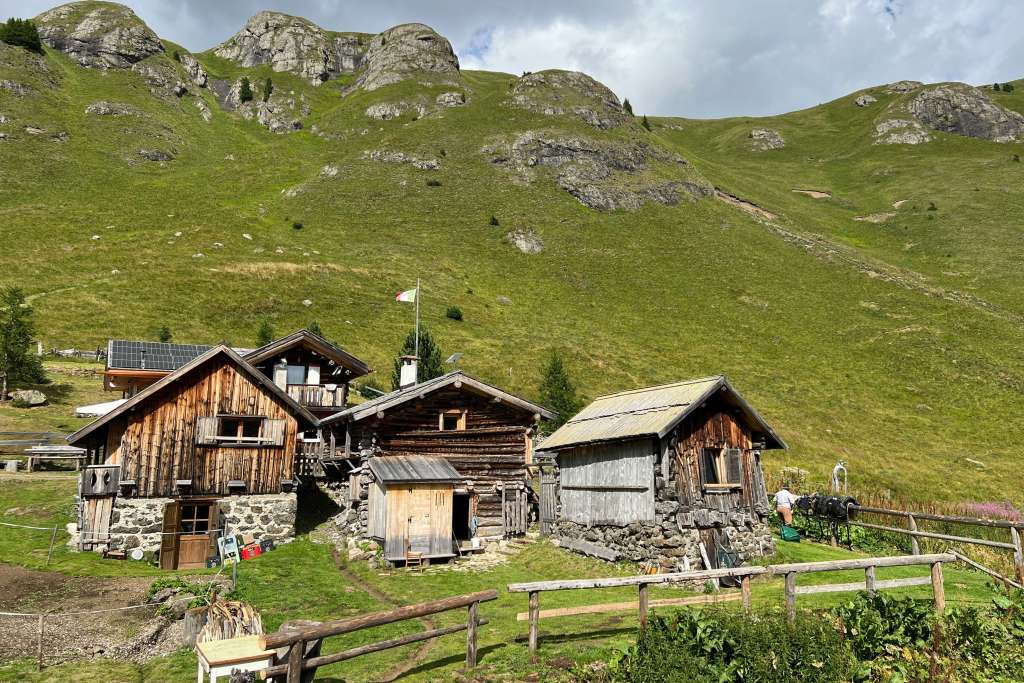
I first met Alberto Gauberg of Dolomiti Horsetrek—a tall, dark-haired, and classically handsome man—at 6,600 feet in his rustic rifugio, our starting point, nestled in Campitello di Fassa, approximately 70 km northeast of Trento in the Val di Fassa. With the effortless confidence of a native, Alberto outlined the route of our trek ahead and introduced me to his striking Haflinger horses, born and raised in the Dolomites, known for their strength and beauty. A grandson of an Italian Cavalry Captain, Alberto spent his life on horse treks through the Alps. He also lived for years in Patagonia, alongside gauchos of southern Argentina, working in the mountains accessible only from the back of a horse.
While Alberto arranged our saddle bags, I took some time with Marco, an Argentine gaucho and expert horse guide. Together, we groomed the Haflingers before they were assigned to us, ensuring they were ready for the journey ahead. Marco divides his year between the Italian Alps, working alongside Alberto in the summer and Argentina’s Palermo, where he helps prepare some of the world’s top polo horses at Cancha 1.
It was a perfect sunny morning when the three of us set off across the mountains of Campitello di Fassa, with Alberto leading from the front. Both men wore the traditional attire of local Tyrolean guides: Alpine felt hats, plaid shirts, wool Gilets, bombachas, and leather chaps adorned with elegant stitching and punched-leather frills. Our horses were equipped with Italian Trekker saddles—lightweight, inspired by military designs—offering comfort for both horse and rider.
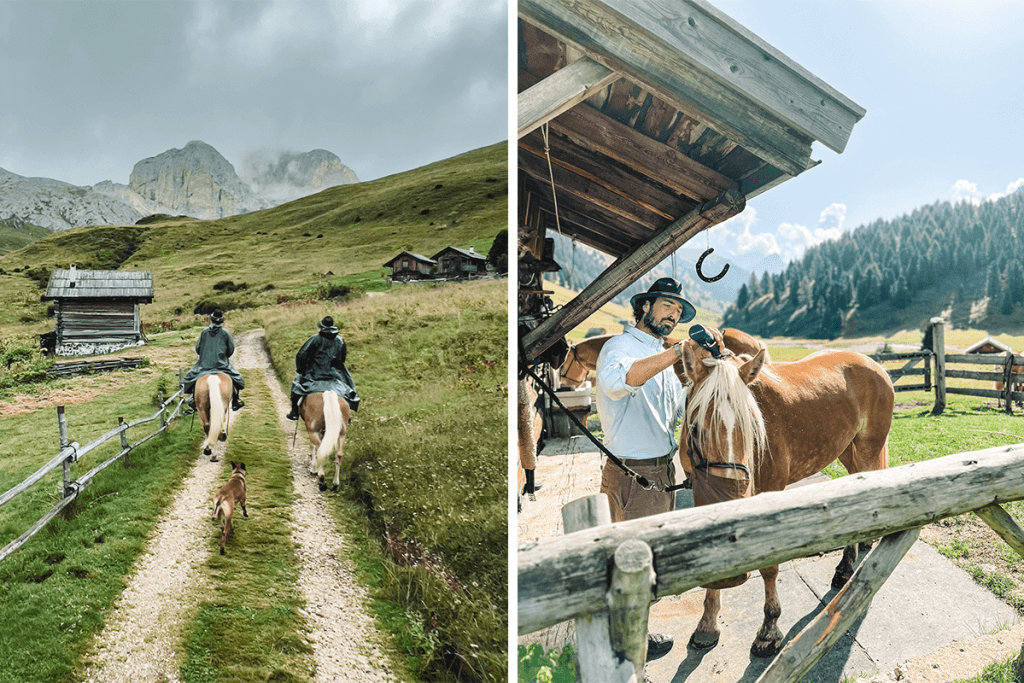
As my horse settled into his stride, I worked out how to juggle saddlebags, neck-reining, and taking photographs. We were in a remote, tranquil world—far from roads and the noise of civilization. The only sounds were the rhythmic breathing and footsteps of the horses, the occasional crackle of insects, the crisp summer grass snapping under hooves, and the distant presence of determined hikers. We traversed some of Europe’s most exhilarating terrain, navigating narrow, steep paths that led to mountain summits—a challenging trek that pushed us through rugged, dramatic landscapes.
The southern Tyrol has long been a refuge for physical exertion, spiritual renewal, and escape from the stifling Italian summer heat. I’ve visited this region three times now, and each time, it’s captured my heart. I’ve fallen for the majesty of its jagged peaks, formed over millennia from lighter-colored rock than much of the Alps’ granite and gneiss. But more than the scenery, I’ve fallen for the rich mosaic of cultures here. Often called the Pale Mountains, the region ranges from the glamour of Cortina d’Ampezzo in the east (poised for its Winter Olympic moment in 2026), to the autonomous western province of South Tyrol, where German is the predominant language. In areas like Val Gardena—famous for its woodcarving tradition—and Val di Fassa, the landscape feels more Austrian than Italian.
We rode, we rested beneath the cool shade of trees soaking in the scenery, and we fell into an easy rhythm of conversation and silence. As we climbed higher, we weren’t alone—others ascended these peaks too. But we were the only ones on horseback, following Alberto’s plan. I opted for a two-day, one-night circuit, though Alberto’s itineraries range from two to six days, demanding riders to be experienced and fit, as each day involves anywhere from two to eight hours in the saddle.
After four hours on horseback, we arrived at our final camp in Mazzin, the smallest village in Val di Fassa. Known for its rich history and archaeological sites, Mazzin’s authentic charm lies in its simplicity. We settled into Rifugio Dona, perched at the foot of the Catinaccio and nestled within the Val di Dona—hidden behind a steep, guarding forest, almost inaccessible from the valley below. Surrounded by craggy ridges still cloaked in vibrant greenery, the landscape stretched infinitely until the jagged peaks met the clear sky.
Outside, our horses roamed freely as the haunting sound of cowbells drifted through the hills. The environment was wild and extraordinary—the panoramic views revealing the Catinaccio, Marmolada, Sassolungo, Monzoni, Ponjin, and the smaller offshoots of the range. Mazzin’s residents have long come here to seek refuge and livelihood, especially during haymaking seasons. The Rifugio itself, a family-owned inn converted from a traditional hay-loft (tabià), opened in 2007, offering simple but cozy rooms that felt like a warm haven amidst the raw grandeur.
That evening, we sat outdoors at a communal table, sharing beers with locals. Later, dining with the family who runs the rifugio, I was eager to uncover the deep layers of history and culture embedded in this place. We were in the heart of a mountain range where approximately 30,000 people still speak Ladin—the ancient language of the region, woven through centuries of resistance and resilience. Most of the inhabitants descend from Ladin Austrians, who—after the region was transferred from Austria to Italy following World War I—became Italian overnight. Mussolini’s regime later sought to erase their language and identity by sending teachers from the south to “Italianize” the region, but many locals resisted fiercely. “Mussolini tried to wipe out our culture,” one woman at our table said quietly, her pride evident.
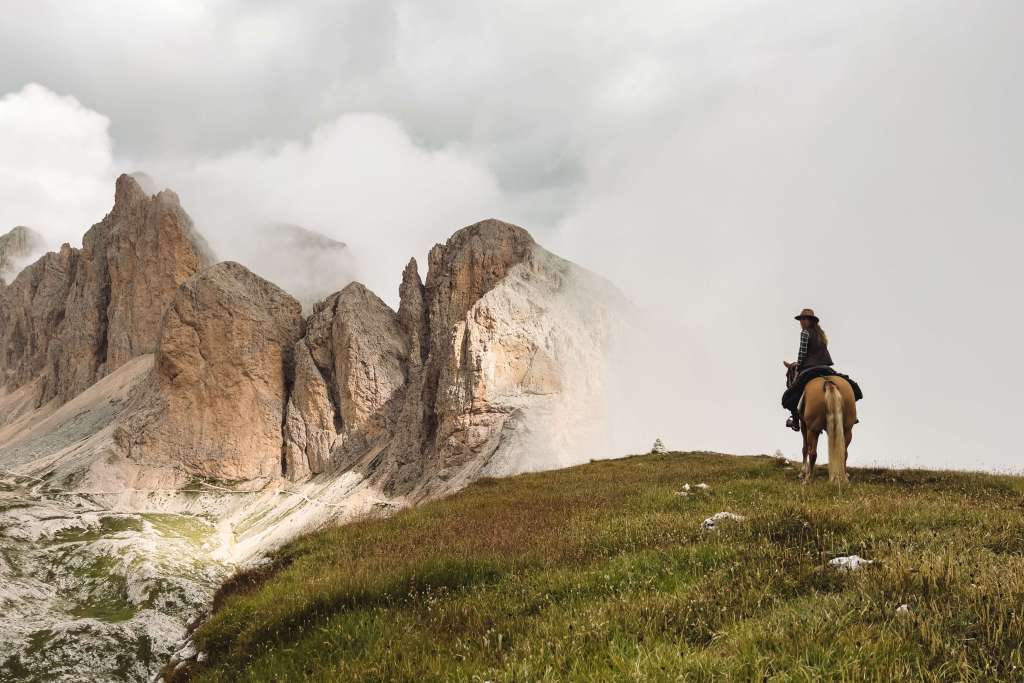
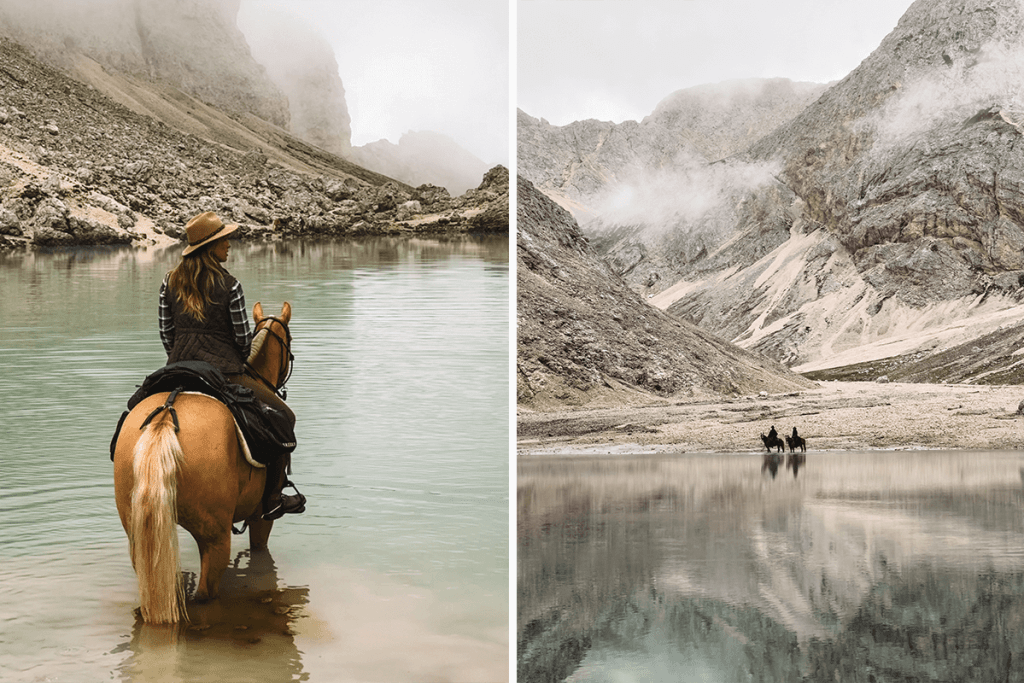
At dawn, we saddled up once more, continuing our ascent into the mountains. Traveling through the Dolomites on horseback is a slow, deliberate journey—navigating steep, exposed climbs and rocky, narrow descents demands patience and reverence. My heart quickened as we approached the legendary slate slopes of Lake Antermoia, nestled within the Catinaccio Massif. It felt like stepping into another world. With our horses trailing behind us, we stood in awe as the lake shimmered below, fed by underground springs and tiny glaciers melting from the mountains above. Unlike many glacial lakes, Antermoia remains full through the summer months, constantly replenished by the hidden waters beneath.
For a moment, it seemed almost surreal, like witnessing the world in its purest form. The mountains, lush forests, and shimmering lakes felt divine, as if we were gazing into the very beginning of creation. I savored every second, especially those from the back of my horse, knowing that these moments, so raw and real, are too rare to hold onto forever.
Alberto Gauberg of Dolomiti Horsetrek can also be reached at +39 380 258 0004
Leave a Reply
You must be logged in to post a comment.